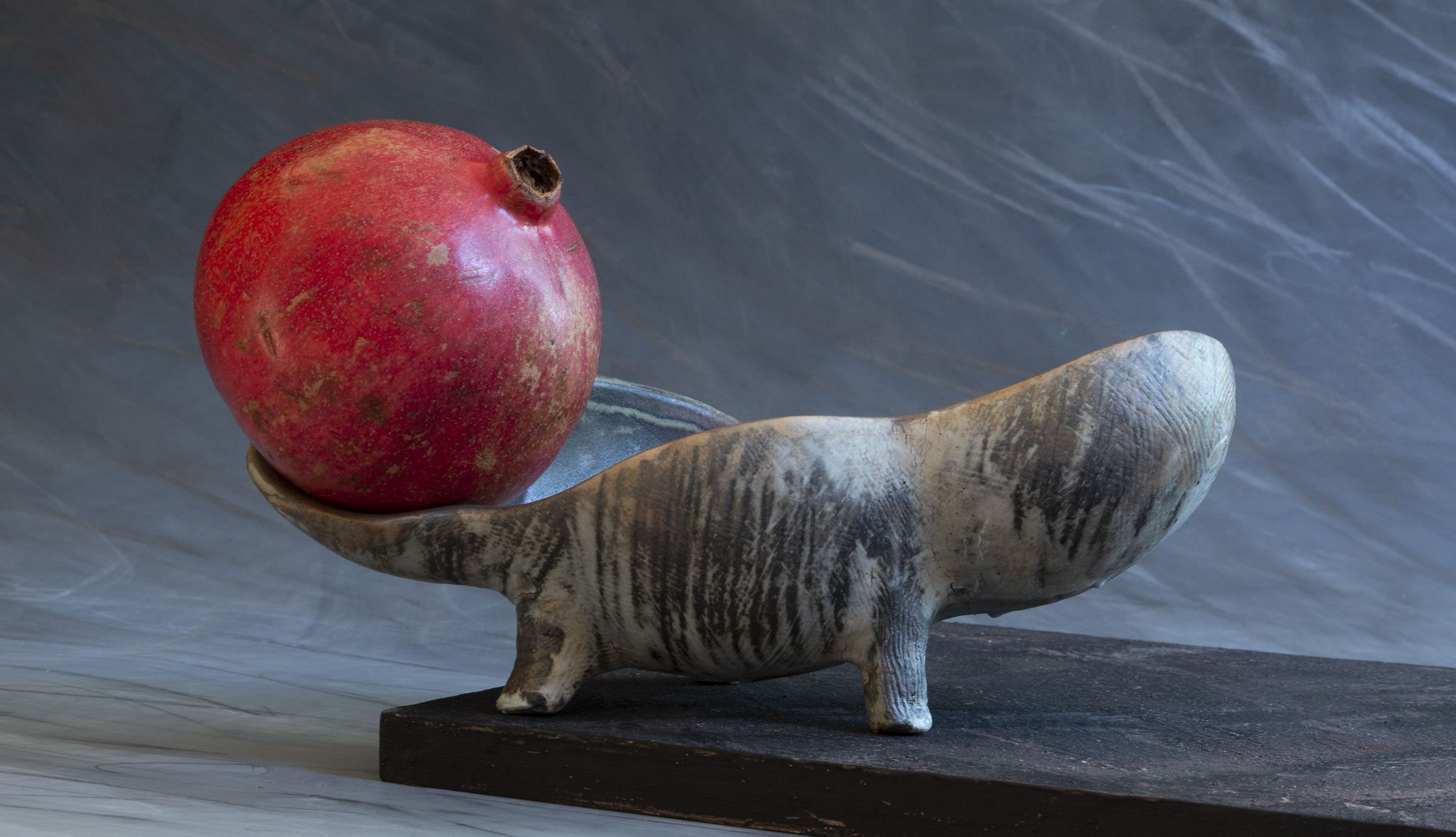
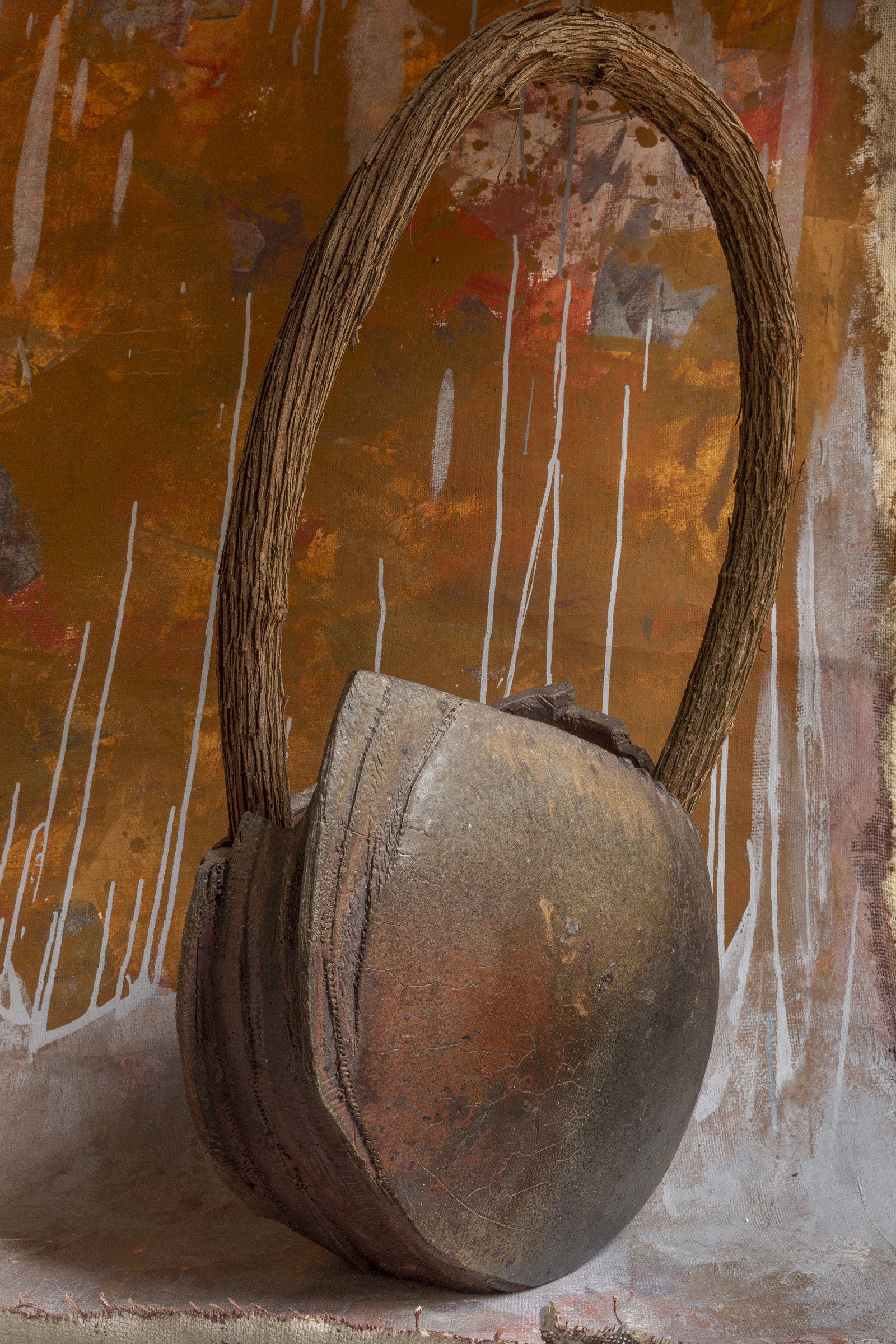
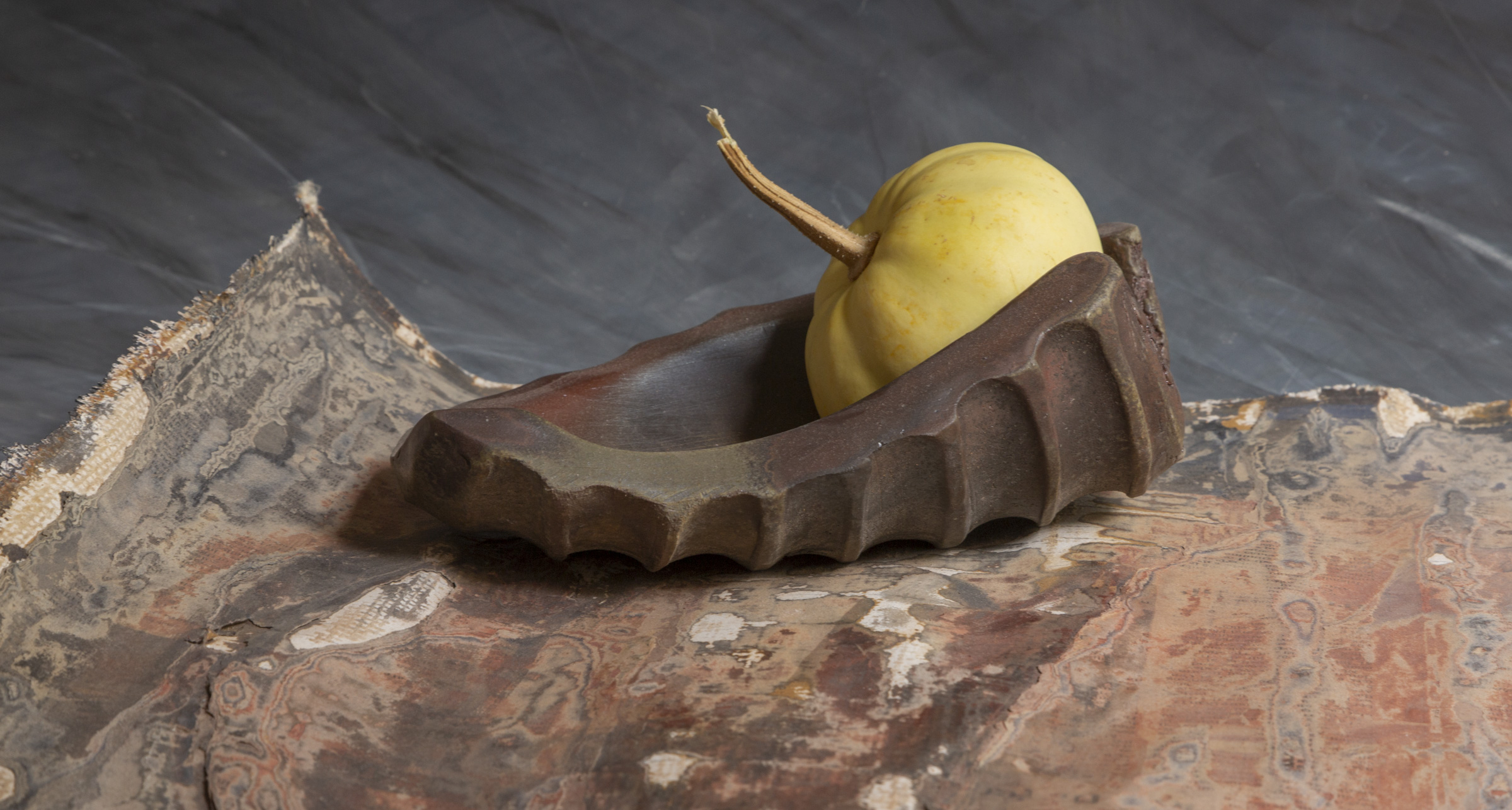
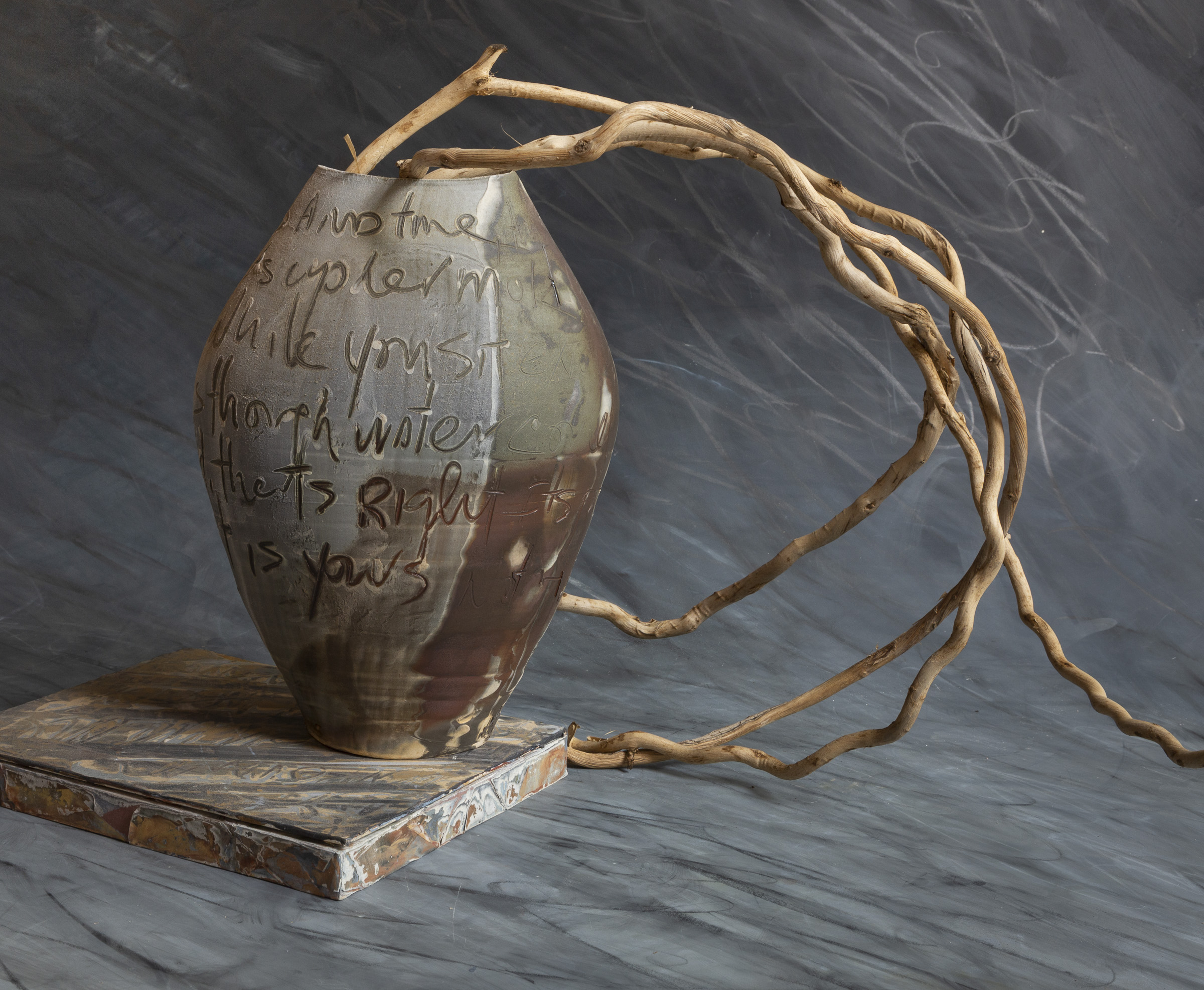
jars

| 1 Comment


We had a great visit with Michael Hunt and Naomi Dalglish of Bandana Pottery here at our studio. Lots of  talk about clay, slip, firing and all the nuances that make our hearts go pitter-patter.  They gave an image talk and exhibited  some of their work and Michael did a short demonstration of making a Korean onggi style jar.

hunt-slab.jpgMichael learned to make onggi style jars in Cholla Province in South Korea.  Michael starts his jar by forming long slabs that are flung on a concrete floor.

hunt-begining.jpgThe slab is turned on edge on a base on the kick wheel.The pot is then shaped and stretched using an anvil and paddle while the kick wheel spins. Very little water is used to retain the strength of the clay so the jars could be made quickly with great strength.

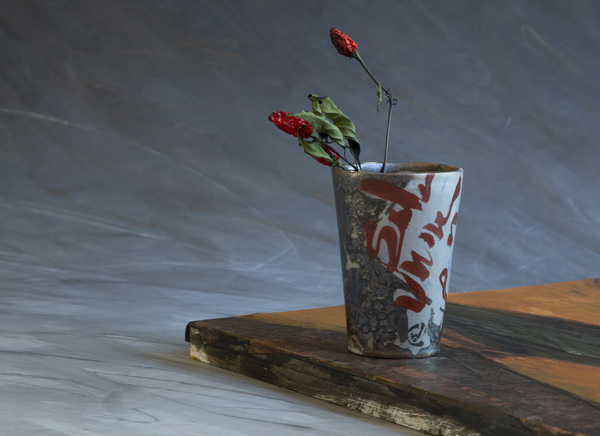
hunt-finished-vase.jpgWhen the jar was completed one of the visitors asked Michael how he views his  pot. There was a great discussion about the view from the potters wheel versus the perspective view of the user. I  personally love the moment when I take a step back and understand a minor shift in form that seems to help the jar take in a deep breath.

hunt-top-view.jpgThis week I helped Warren pack up two of his large storage jars so we could deliver them to Douglas Dawson Gallery in New York City for the Spring Arts & Antiques show at the Armory.

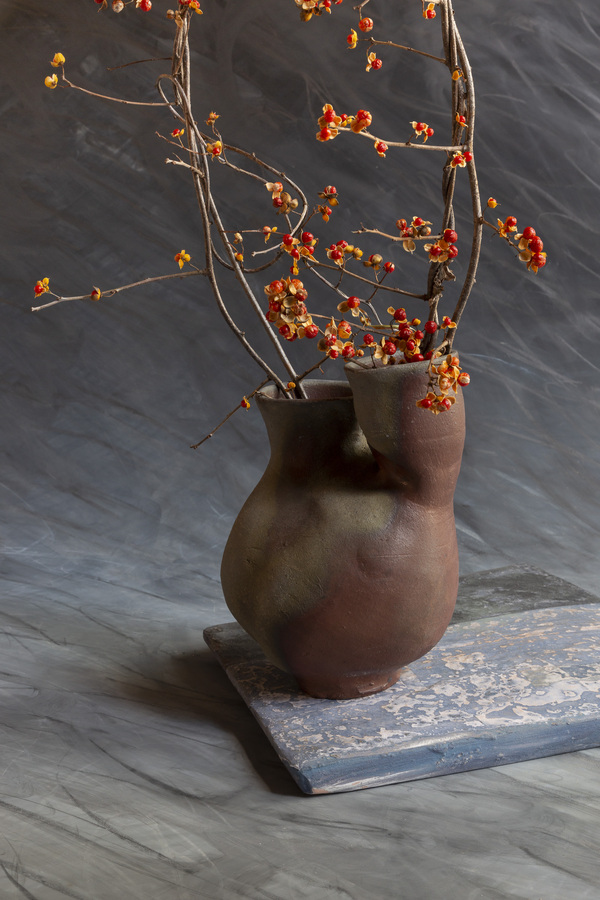
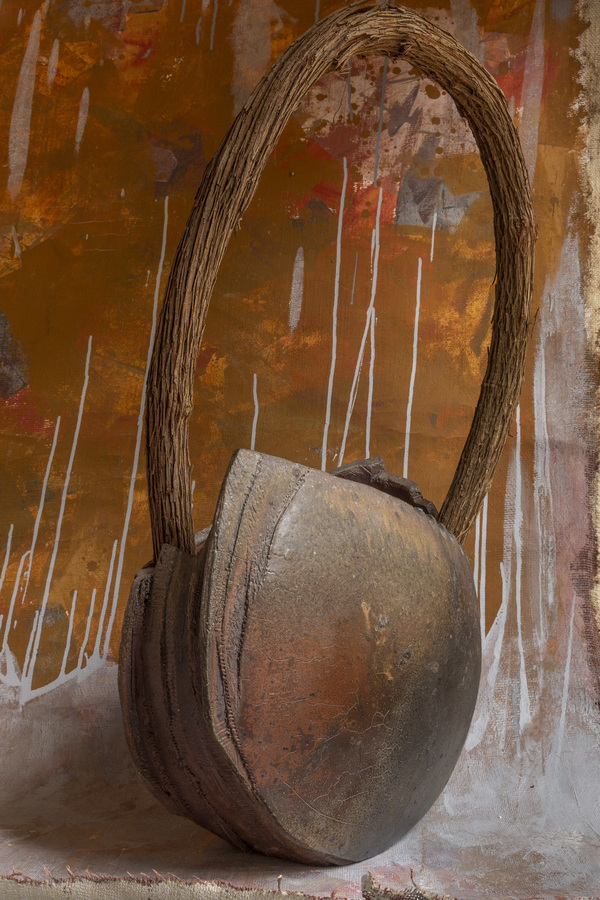
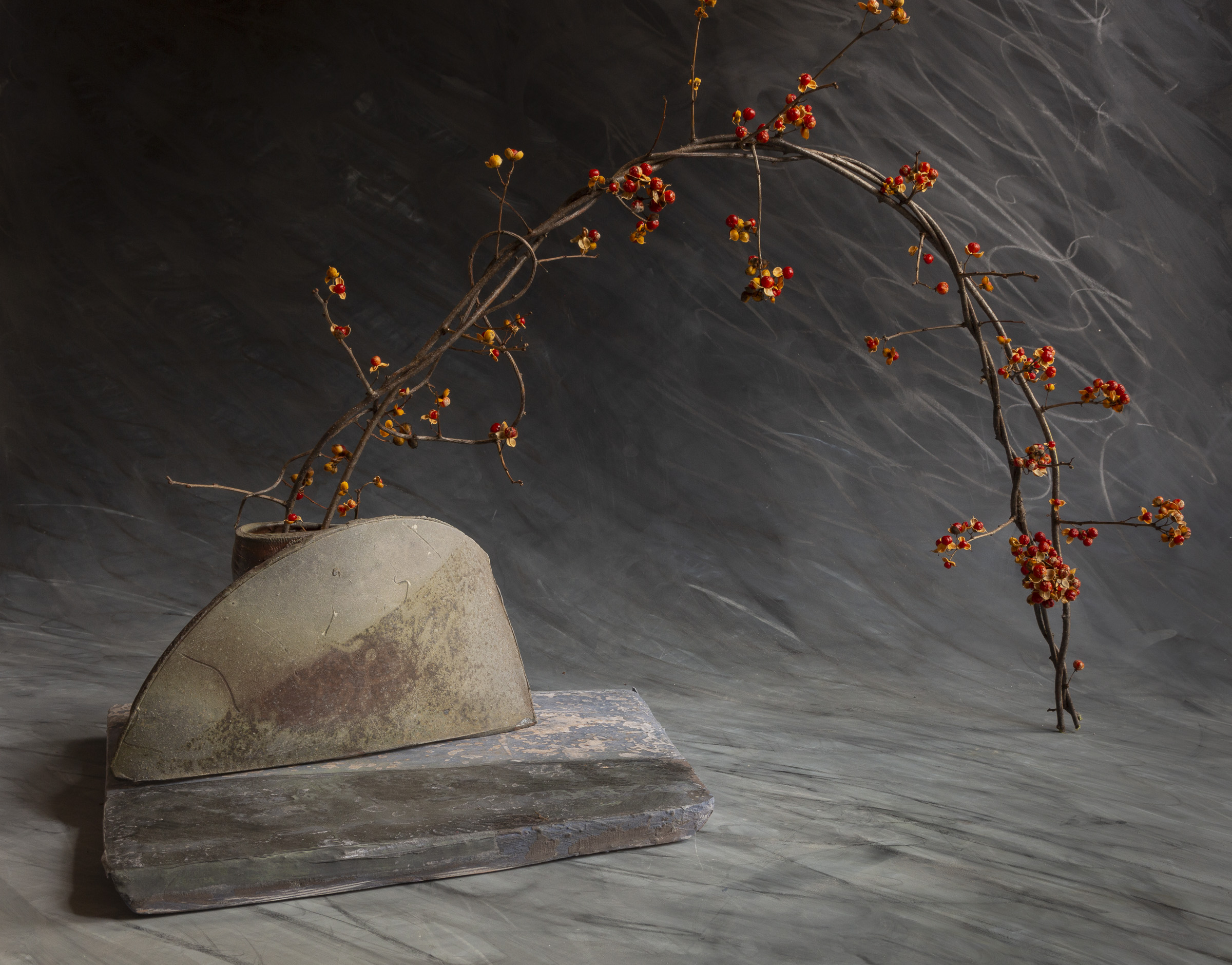
Frederick-Broken-Neck-Storage-Jar-crop.jpgI have mused on the question of how we view jars. I have seen them in the dusty natural light of our studio. I have helped to load them in the back of our Toyota like two corrugated mummies and then have seen them in the clear light of a gallery setting.

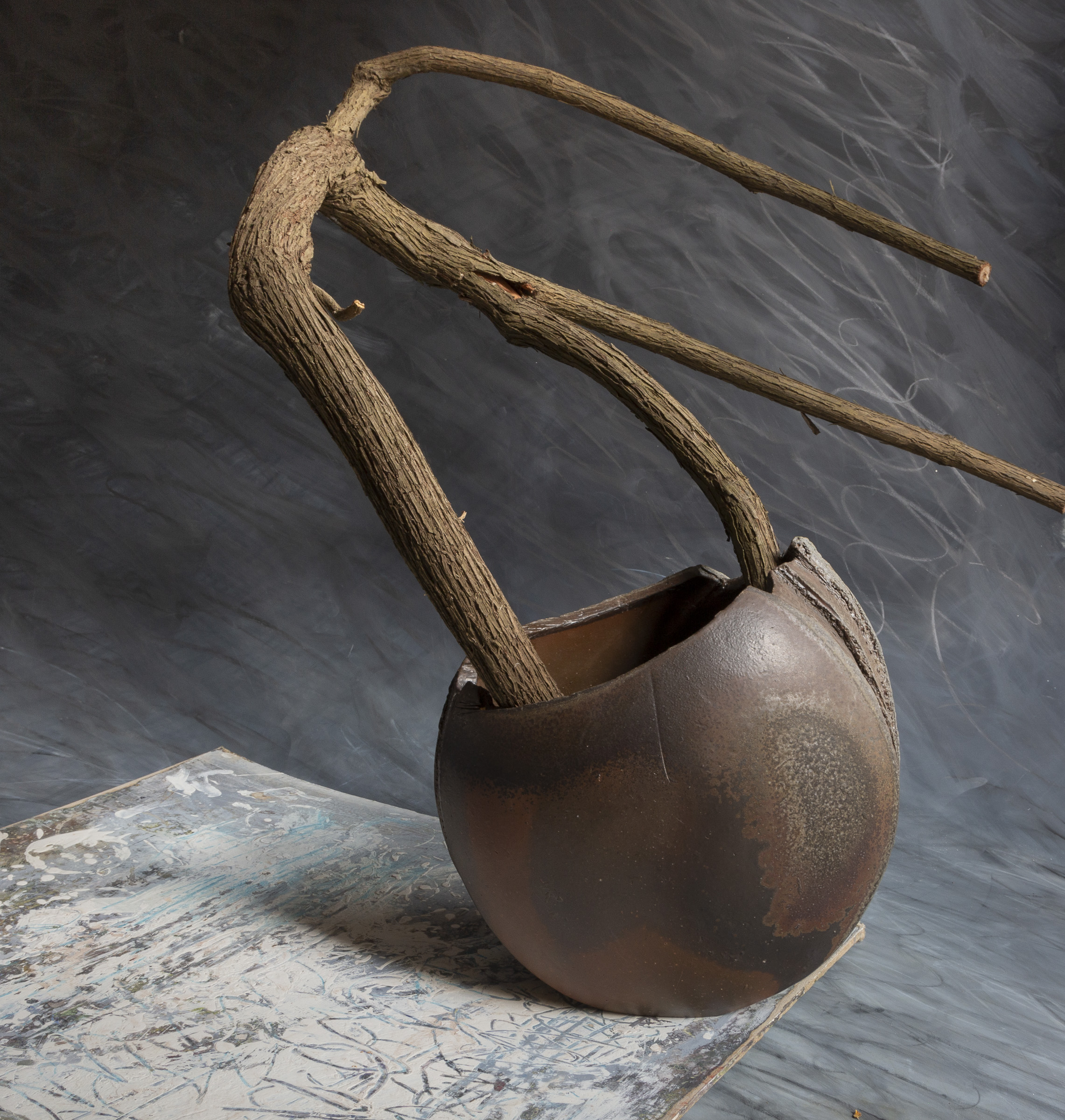
sphere-jar3670.jpgI am reminded of how I love to see pots in multiple views. When I first saw neolithic Chinese Jars from a bird's eye view I felt like I had a whole new understanding of use, form and decoration. A vantage point that was akin to how the potters must have felt as they formed and decorated their jars.

chinese-jar.jpg

artist plate

| 1 Comment
Paper Plate, Plastic Plate, White Plate, Artist Plate
A collection of artist-made dinner plates and related insights about food an exhibition at Penland Gallery, Penland, North Carolina
Artists were asked to respond to a questionnaire. Here is my response.


Do you enjoy cooking? Yes. Mostly because I have a fast metabolism and I know what I like so I might as well cook it rather than get cranky when it's too late or doesn't satisfy.

Are you a good cook? Or are you barely able to boil water? I am an intuitive cook. I have basic working recipes that I vary depending on the season and what's in the garden or the fridge. One of the most interesting things I did in terms of cooking was to be a recipe tester for Elizabeth Andoh for two of her Japanese cookbooks.She has a new E book called kibo. I would go to the Asian grocery store with a list, not knowing whether the item was frozen, dried, fresh or canned. I tried to follow her directions to the letter, which is not my usual habit, and thus I learned a lot. These new recipes also forced me out of habitual uses of plates when serving the meals.

Catherine-WHITE-yaki-omusubi-5293.jpgWhat is your favorite food for dinner? Basically, I like a balanced meal with rice, vegetable and protein.

Besides your own dinnerware, whose plates do you enjoy using?
I have various historical pieces that get pulled out when we are having a celebratory dinner; some English, Japanese, Chinese and Korean. Often when a friend comes to visit with a dog they ask what bowl can they choose for water. I tell them, "pick any bowl" and I am floored by the number of times different friends have picked the Sung dynasty celadon bowl off the open shelves--so I have to add, "well actually, any bowl but that one." I love the idea that some person's hands--that are essentially the same as mine--made these bowls. Could they have imagined that a bowl made in China has ended up in this modern world of Virginia, yet still speak a poetic language of use?

C-WHITE-Landscape-Plate-small.jpgDo you think about a specific food when you are designing a new piece for tableware? I have been making plates and bowls for Omen Restaurant in New York City for 29 years. We sometimes sit down with the chef when he is designing the next season's menu to discuss how the plate will contrast or echo the food. Will the plate need to accommodate sauce or can it be flatter? If I'm missing something specific or just different in my kitchen I'll go make it as well.

C-WHITE-Rough-Edge--Plate-small.jpgDoes food influence the color choices in your work? Food color influences which plates I choose to use for a given meal. My palette is also honed so it isn't in garish competition with food.

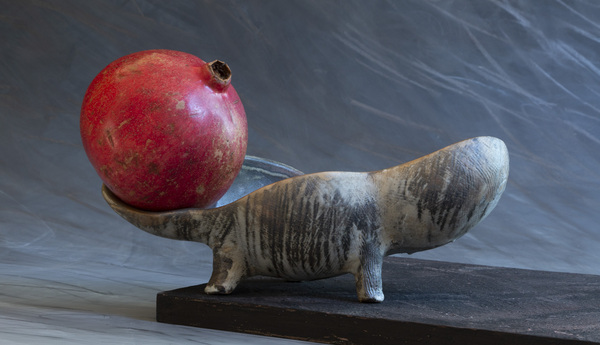
Do plates have to be round? They don't even have to be whole. The most used plates in our house for individual servings are square. Currently, my favorite serving dishes are woodfired leaf-shaped plates.

C-WHITE-Leaf-Plate-small.jpgIf you could only eat one food (or type of food) for the rest of your life, what would it be?  The key for me is variety and contrast, so I can't even begin to answer such a question.

Do you have a "Proust food?" A dish or meal so rich in personal associations that just to taste it brings a specific place and time from your past vividly alive in your mind? My childhood lunch was Campbell's tomato soup and a sandwich. Both my parents worked at home and on most days we sat down to lunch together. My father said he liked Campbell's tomato soup because you can count on it being the identical shade of red, the same tomato flavor, the same consistency and salt content. Sometimes I think that avoiding that regularity is part of what leads me to embrace making homemade soups. They are always slightly different. I also use the soup ideal as my guideline for mixing clay. Each time I mix clay it is going to be slightly different because I gather a different bucket of clay at the mine or add slightly more or less of heavier iron bearing clays. In response, my forms then vary as well.

campbels-Cup-of-Soup.jpg What artists, dead or alive, would you enjoy sharing a meal with? I often look to Rosanjin for inspiration because he ran a restaurant and looked so carefully at historical pots. I would love to share a meal with Picasso for his immediate vibrancy and inspiration from the food to plate. But if we're dreaming, why not Morandi  and Cezanne?

Do you have a favorite cookbook (or just a favorite cook...)? Lately my favorite is Heidi Swanson's Super Natural Cooking. I like her web site  www.101cookbooks.com  and how she varies flavors and spices. It gets me out of habitual approaches to the same old vegetables.

C-WHITE-Triangle-Plate-small.jpg

a moment for beauty

| No Comments

wave-plates.jpgWhile waiting for plates to dry I took a little excursion with my camera. It's a moment to pay attention to details.

coffee-plate.jpg
Make some coffee.

cake.jpg
Eat cake and look at the flowers.

Then go back to work with a refreshed view.

magnolia.jpg
"You cannot help but learn more as you take the world into your hands. Take it up reverently, for it is an old piece of clay, with millions of thumbprints on it."
--

John Updike

seeing the unseen

| 1 Comment
glazing-slab-plates.jpgI am glazing pots for the gas kiln. I told a friend I would send some process images. So as the day progressed I snapped some pix. I clicked the shutter and was reminded that one of the skills a potter has is to see into the future. Beginning with a wet mud-like substance, I understand the nature of drying and shrinkage. I can look at the pink of bisque and imagine what the stoneware clay will look like under a high fired celadon glaze. I look at current experiments with incremental additions of iron in the slip and imagine subtle shifts in the creaminess once fired. As I look through my lens with the eye of a non-potter I wondered how they see the transformation and information that a potter takes for granted.

glazing-foot-plates.jpgI look at the plates and visualize impending transformations. These plates will make up sets that are a family of close siblings. I work intuitively taking photos and notes as I focus upon the next group of experiments, stretching my capacity to see the unseen. My dual-edged imagination remembers the raw colors and layers I originally fell in love with and lives for the excitement of fire induced transformations into durable, aesthetically usable poem.

glazing-triangles.jpg

As a potter I confront the conflation of art and science on a daily level. On the wheel I balance centrifugal force, gravity and the plasticity of clay. When I mix clay I consider particle sizes, geologic history, the location of origin and how the material acts in the wet state tensioned with how it appears once fired. In the kiln I collaborate with heat and fire, concerned with oxygen levels during combustion and cooling.

Potters continually mine their understanding of how materials shrink and melt, heat and cool and finally inhabit the kitchen and the table, our hands and our spirits. I find it particularly exciting to bring my material understanding down to its most elemental level by collecting materials that have not been processed for industrial use. These often contain impurities and variation. It allows me to feel not only like an artist and collaborator, but also like part mad scientist. I understand the rules of science and craftsmanship but break them in the same breath.

lederman-plate600.jpgTuesday I attended a panel discussion at Georgetown University about art and science marking the opening of Where the Seafloor Melts with work by the ceramic artist Joan Lederman from Woods Hole, Massachusetts. Joan uses ocean floor sediments that are by-products of oceanographic research. Using these materials she creates artifacts or markers. She approaches science as an outsider and passionate amateur, beguiling us as a storyteller. She comes to her objects as a crafts-person.

ooze.jpgJoan discussed the coincidence of material coming to her door due to the generosity of a coastguard seaman and her proximity to the Woods Hole Oceanographic Institution, which has led to some unusual collaboration. The various forms of mud and ooze flowing across her doorstep have given her a material understanding on a molecular level and a global level due to  mapping the origin-locations of her mud. She has had to wrap her imagination around geological history in a daily development of mind and memory. She perseveres in her studio experiments, working with the serendipity of what scientists contribute as well as an acceptance of what the kiln permits as she builds upon trial and error. Embedded in her objects is material knowledge and an artistic endeavor to document location, constructing a confluence of form, surface and variety.

lederman-plates-2.jpgIt is when Joan steps outside the usual constructs of pottery craftsmanship, crossing the conventional line with materials that almost melt, that crawl or  halo, overall creating poetic variations in surface texture, that they are the most interesting to my eye. Her documentation of heat work and place of origin show the work at its best. The fact that the melted materials are placed on a bowl or a cup or a vase seems almost incidental. There is room for more concept and collaboration of form and surface with the clay. The science has had so much to say there remains more untapped potential for the artistic side to come up to the podium and speak.

lederman crackle.gif


mixing it up

| 2 Comments

foot-swipe.jpgBack in the studio.
mixing it up...


6-swipes.jpg


to the new year

| 1 Comment
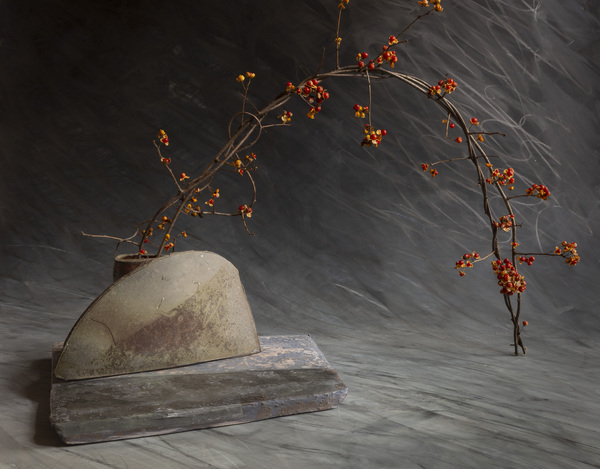
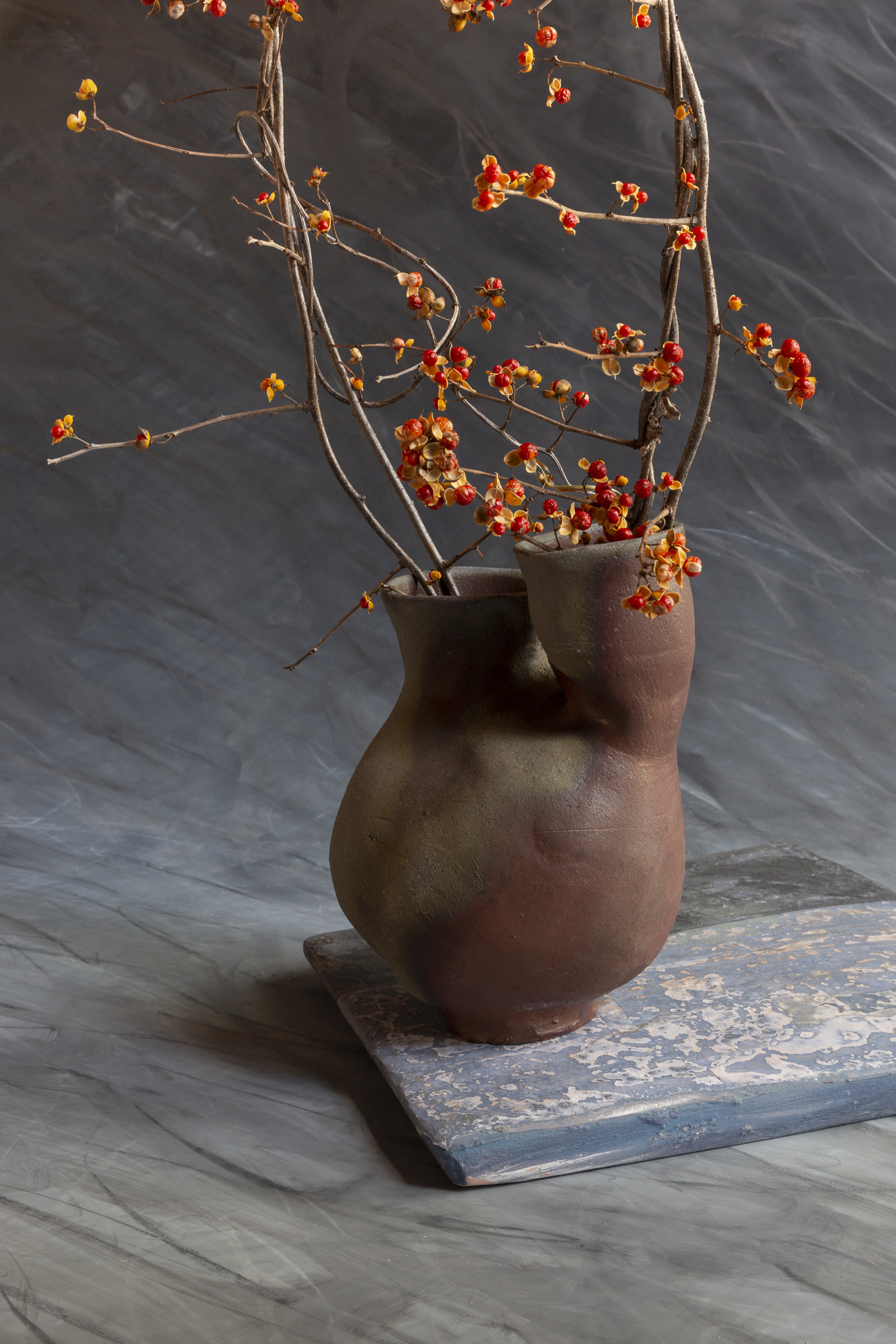
I am beginning the new year looking at twigs and re-imagining the roots as I walk with hope and desires while the new year is untouched and still possible. As a young man W.S. Merwin met Ezra Pound in a windowless room at St. Elizabeth's Hospital. Pound advised the aspiring poet to begin his career, as he put it: "Study the roots, not the twigs."

forsythia vase.jpg
With what stillness at last
you appear in the valley
your first sunlight reaching down
to touch the tips of a few
high leaves that do not stir
as though they had not noticed
and did not know you at all
then the voice of a dove calls
from far away in itself
to the hush of the morning

so this is the sound of you
here and now whether or not
anyone hears it this is
where we have come with our age
our knowledge such as it is
and our hopes such as they are
invisible before us
untouched and still possible


To the New Year by W. S. Merwin

#21 winter solstice 2011

| 2 Comments
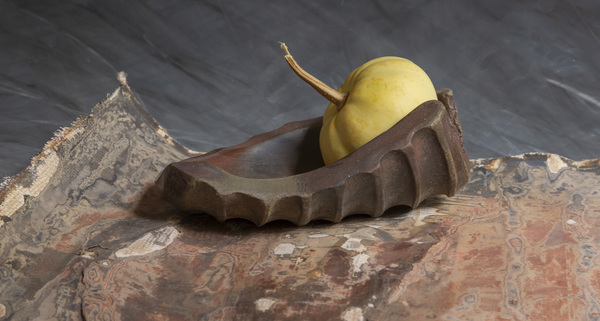
One of my techniques for dealing with short days and excessive indoor time is setting bonfires. I had hoped to do one tonight to celebrate the turning point from shorter days to longer ones. Tonight is wet, but fortunately Zoe and I spontaneously decided to light the fire last night when it was warm and still. I was the last one sitting by the fire, musing and studying the subtle shift from the flat, dark tree line to the color tinged darkness of the night sky while listening to the geese landing on the pond.

21 clementine bowl.jpg"If we didn't remember winter in spring, it wouldn't be as lovely; if we didn't think of spring in winter, or search winter to find some new emotion of its own to make up for the absent ones, half of the keyboard of life would be missing. We would be playing life with no flats or sharps, on a piano with no black keys."
--Adam Gopnick, from Winter: Five Windows on the Season, p. 179.

#20 winter solstice 2011

| 2 Comments
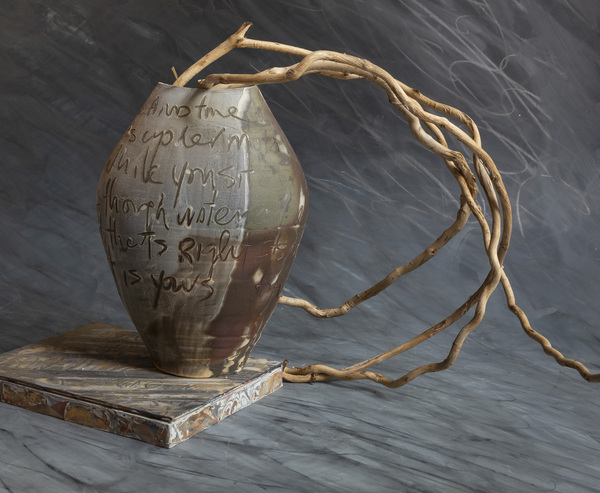
I remember walking the shore on Heron Island, Maine in silence early in the morning. It was the day after we spread my mother's ashes in the mouth of the Damariscotta River. I was in search of a daylily, hoping that one of the flowers we spread in the water might have washed ashore in the high tide. I wanted physical evidence of her, however the blossoms were missing,  just like my mother was no longer with the living.

After the Heron Island house burnt down two years ago most of my pots that were used in the kitchen broke in the fire. The shelves in the kitchen collapsed in the intense heat and objects fell from the attic and crushed the plates, cups and bowls. Zoë and I collected the shards and carried them to the rocky shore and tossed them in the ocean, hoping again that one day we would find them reincarnated as round-edged sea glass tossed by the tides. This summer I spent many fruitless, silent mornings walking the rocks in search of a shard as evidence of change.

At the end of August after I gave up looking for a shard Zoë found one dark glazed bit of plate. After I gave up looking for flowers in the high tide I found the blossoms in the garden again. Some days working in the studio is similar; I keep after an idea of a shape and when I let go and turn the idea on its head the solution appears as if it had always been there.

20-vase.jpgAnd there is the silence of this morning
which I have broken with my pen,
a silence that had piled up all night

like snow falling in the darkness of the house--
the silence before I wrote a word
and the poorer silence now.
--From Silence by Billy Collins

#19 winter solstice 2011

| No Comments
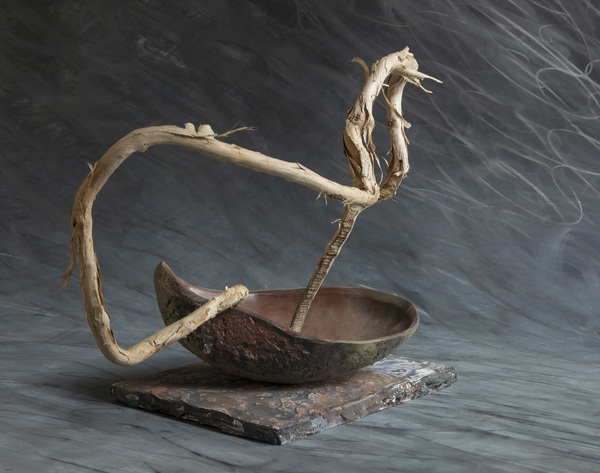
19 axe vase.jpg"And let me talk to you with your silence
that is bright as a lamp, simple as a ring.
You are like the night, with its stillness and constellations.
Your silence is that of a star, as remote and candid."
--Pablo Neruda from I like for you to be still

Recent Assets

  • hunt-top-view.jpg
  • chinese-jar.jpg
  • Frederick-Broken-Neck-Storage-Jar-crop.jpg
  • sphere-jar3670.jpg
  • hunt-begining.jpg
  • hunt-finished-vase.jpg
  • hunt-slab.jpg
  • campbels-Cup-of-Soup.jpg
  • C-WHITE-Landscape-Plate-small.jpg
  • C-WHITE-Triangle-Plate-small.jpg

Recent Comments

  • Winnie: It was amazing watching Michael give birth to that big read more
  • Winnie: Hmm. I will take one rice ball and one rectangular read more
  • kerrie sanderson: Your artwork is calm beauty. read more
  • Michael: This is such a great way to create marks and read more
  • Laura: Hey now, THAT is cool. read more
  • cynthia: "Study the roots, not the twigs." So true! Happy New read more
  • Ruth Seib: My favorite. Catherine, this is an outrageously beautiful bowl, and read more
  • Ken Davis: The quiet peaceful thoughts that you post each solstice reminds read more
  • Jan Flaherty: Catherine, Thank you for sharing such personal thoughts in such read more
  • Eugenie Torgerson: So true. It is easy and even righteous to value read more

Pages

Find recent content on the main index or look in the archives to find all content.