Author: Catherine White

  • #12 summer shards 2026

    I often make an analogy between reading poetry and reading pottery. When we read poetry we discover language that describes emotions, ideas, and feelings that are beyond words. I think of reading the qualities of pottery as something similar. We use the language of form, surface, scale, and heft—to name a few—to convey emotions, ideas, feelings that are beyond the strict confines of function.
    When the photographer Mitch Epstein was asked “what does it mean to look harder” his response was

    “It means to read pictures. We’re taught to read literature, but we’re not generally taught to read images. Photographs are used for so many different purposes, from journalism to advertising to family mementos. And I think remarkable photography insists upon a critical reading of a well-made picture’s layers, its conceptual tension, its historical depth. Much of the backstories of these pictures are embedded in the pictures themselves.

    My goal with the American Power series was to make pictures that weren’t simply illustrative, but would resonant metaphorically, that could speak to the paradox, complexity and confusion of our cultural relationship to energy; that could convey what’s at stake. Each picture stands alone, but they come together as a series to form a narrative that suggests the bigger picture.”

    —Mitch Epstein and Urban Omnibus , A Conversation with Mitch Epstein, Urban Omnibus, April 4, 2012
    2

  • #11 summer shards 2026

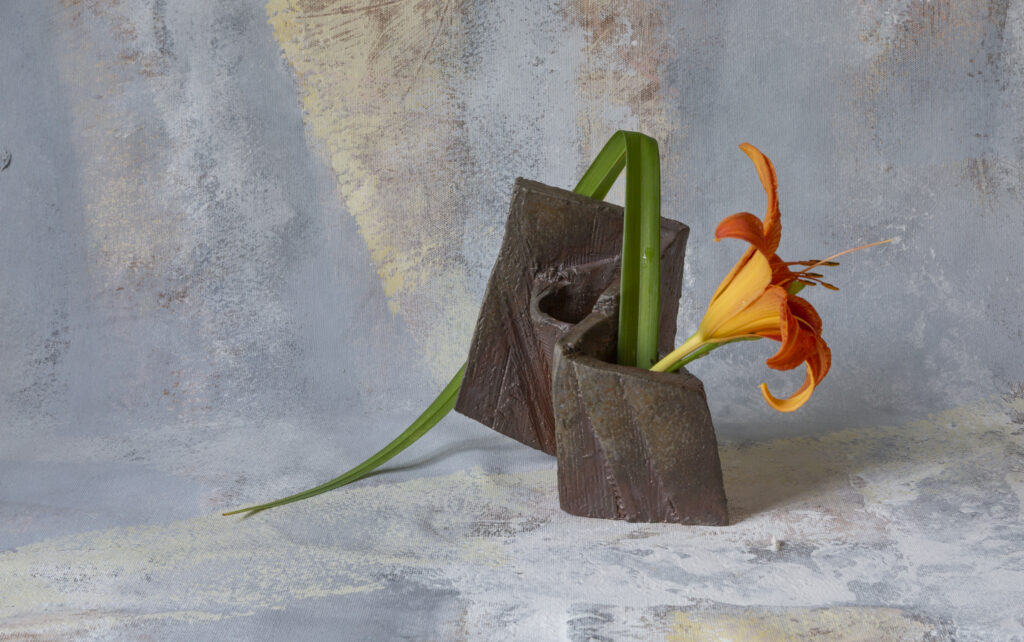
    I pick daylilies and can’t help but think of my mother. The mulching of memories are folded into my hands as I choose a pot. I often see her wrist in mine as I sweep the kitchen floor and race out the door to catch the sunset.

    Kissing the Opelu

    I am water, only because you are the ocean.

    We are here, only
    because old leaves have been falling.

    A mulching of memories folding
    into buried hands.

    The cliffs we learn to edge.
    The tree trunk hollowed, humming.

    I am a tongue, only because
    you are the body planting stories with thumb.

    Soil crumbs cling to your knees.
    Small stacks of empty clay pots dreaming.

    I am an air plant suspended, only
    because you are the trunk I cling to.

    I am the milky fish eye, only
    because it’s your favorite.

    Even the sound you make
    when your lips kiss the opelu
    socket is a mo‘olelo.

    A slipper is lost in the yard.
    A haku lei is chilling in the icebox.

    I am a cup for feathers, only
    because you want to fill the hours.

    I am a turning wrist, only
    because you left the hose on.

    Heliconias are singing underwater.
    Beetles are floating across the yard.

    —Donovan Kūhiō Colleps, in Poetry, July/August 2016

  • #10 summer shards 2026

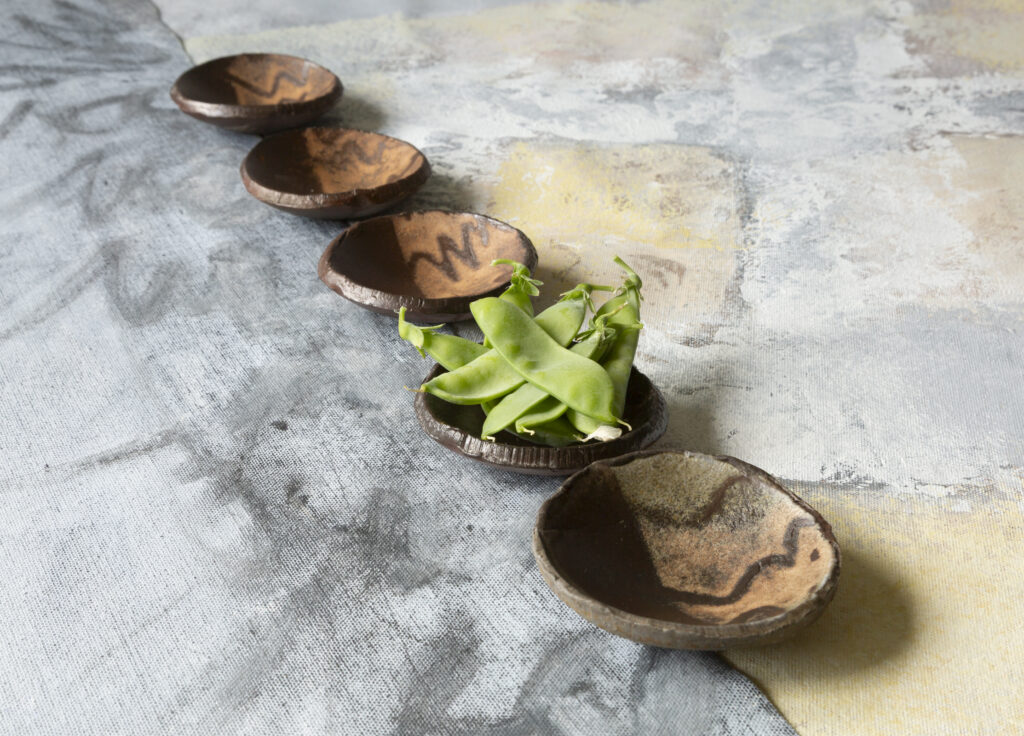
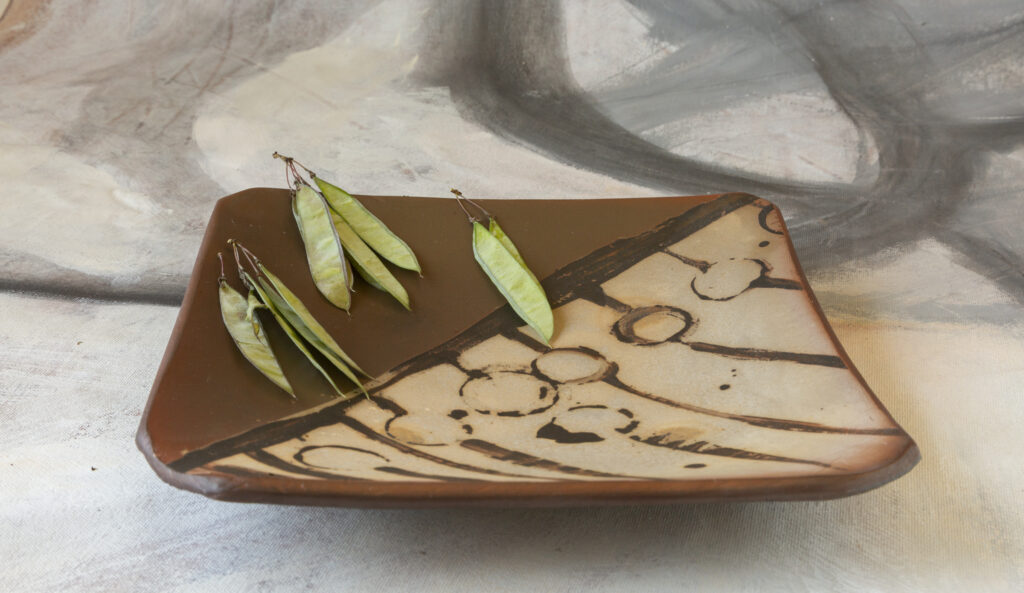
    For years I picked up the seed pods of redbud trees and made drawings of them in my sketchbooks. I like how they remind me of peas, and are specific to this time of year and my sense of place. Often, I forget to make the drawing and they sit in my pocket until they turn to dust or they languish on a plate when my intention to take a photograph falls short.

  • #9 summer shards 2026

    When our daughter was in elementary school she loved to go with us to the hardware store so she could collect paint swatch cards. At one point we used her collection to cover a small side table with all her favorite color names collaged under a piece of glass. She imagined her perfect job would be to name colors for a paint company. I always remember the smell of mixing clay, and the particular feeling of color created with each firing..

    Blue

    when I was young, I wanted to name paint samples.
                 varieties of blue like whispering night air, tragic
    lake. whites like echoing eggshell,

                 memory of light. yellow like nervous blossom,
    hay in afternoon sun. purple like shivering mountain
                laurel or green like air after rain.

    it’s said light blue
                 will keep birds from building—
    they believe it’s the sky.

                 but how could anyone not want to live in the sky?
    even mud daubers
                won’t create their clay pots

    on anywhere colored like flight.
                 disney paints buildings they want to hide
    in bye-bye blue—

                 the same color as the eyes
    of boys who knew how to love me
    if only I blended in

                 with their hands. when I was young,
    I painted my room blue hydrangea—
                 “dare” by the gorillaz played on my indigo radio

    & now when the song comes on
                as I’m driving my white car on the dusty backroads,
    I remember the smell of paint

                 & summer light. my old flame-
    point cat lying on the clear paint tarp.

    all those places I missed—
                 I wouldn’t notice until years later.

    —Laura Villareal, in Poetry, March 2023

  • #8 summer shards 2026

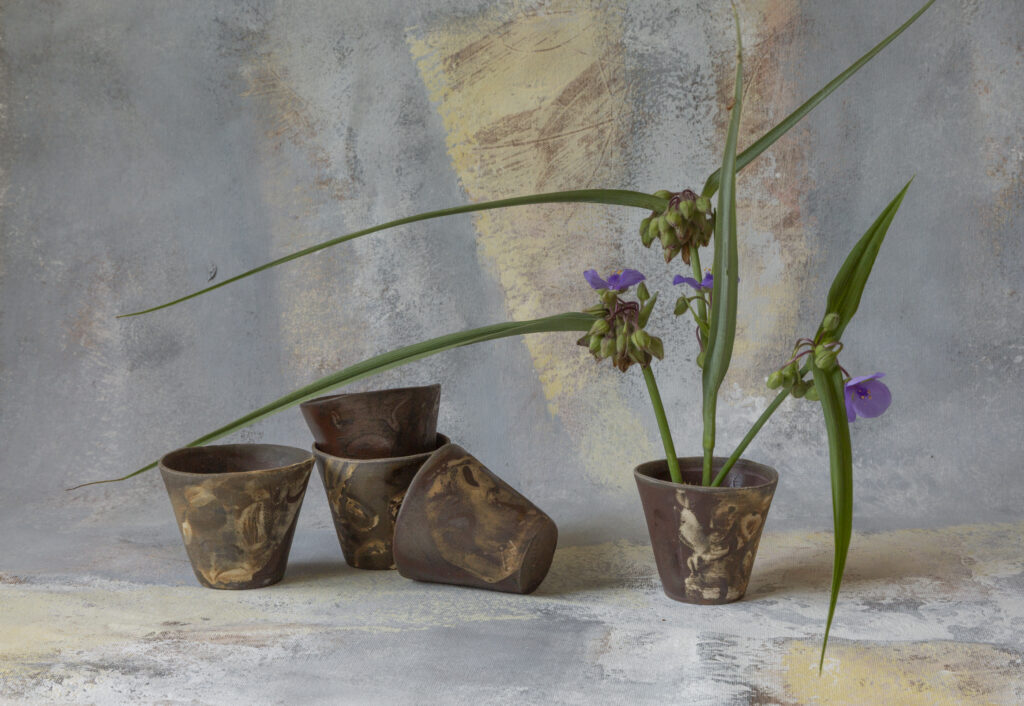
    One reason that I photograph my pots with food, flowers, or plant material I find in the garden is to convey that I intend for my work to be used. Making pots may be common as mud, but the imagination we bring to how we use things is limitless.

    To be of use

    The people I love the best
    jump into work head first
    without dallying in the shallows
    and swim off with sure strokes almost out of sight.

    They seem to become natives of that element,
    the black sleek heads of seals
    bouncing like half-submerged balls.

    I love people who harness themselves, an ox to a heavy cart,
    who pull like water buffalo, with massive patience,
    who strain in the mud and the muck to move things forward,
    who do what has to be done, again and again.

    I want to be with people who submerge
    in the task, who go into the fields to harvest
    and work in a row and pass the bags along,
    who are not parlor generals and field deserters
    but move in a common rhythm
    when the food must come in or the fire be put out.

    The work of the world is common as mud.
    Botched, it smears the hands, crumbles to dust.
    But the thing worth doing well done
    has a shape that satisfies, clean and evident.
    Greek amphoras for wine or oil,
    Hopi vases that held corn, are put in museums
    but you know they were made to be used.

    The pitcher cries for water to carry
    and a person for work that is real.

    —Marge Piercy, “To be of use” from Circles on the Water, Alfred A. Knopf, 1982

  • #7 summer shards 2026

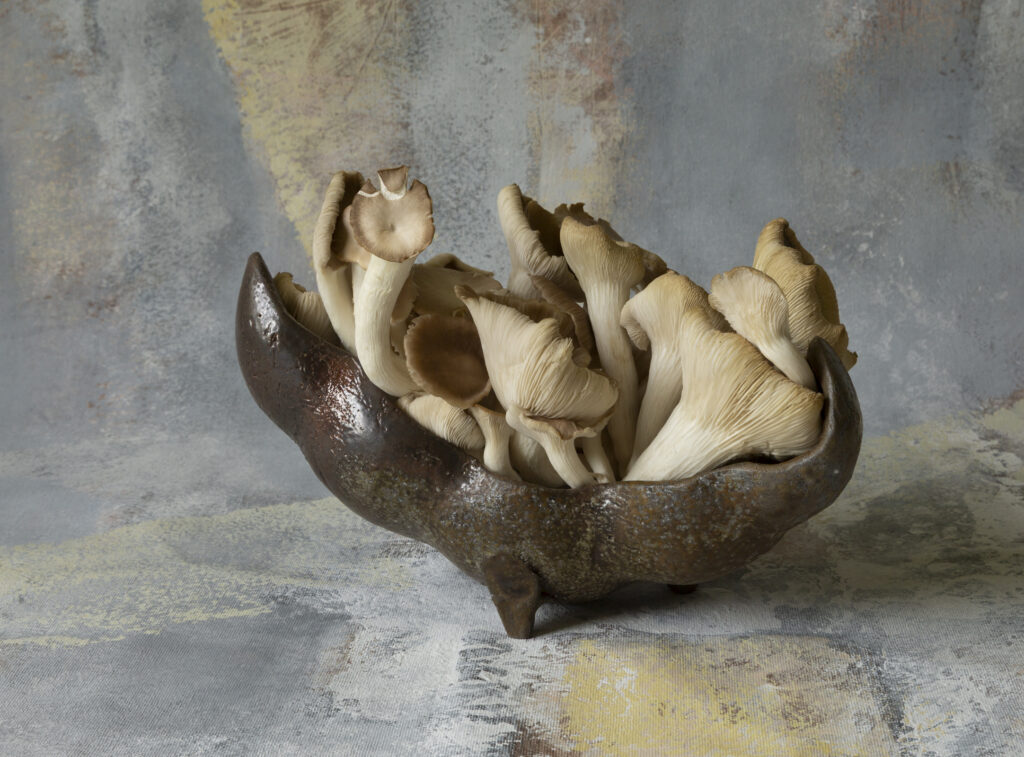
    For the last several years I have made a few bowls which I call Caterpillar Bowls. They feel like the metamorphosis of a piece I made in my 7th grade ceramics class. When I brought mushrooms home from the farmers market Warren suggested I take a photo of them. Once placed in the bowl it was as if the existence of the mushroom was translated into the woodfired bowl itself.

    Each individual lives the story of his or her own existence—we “translate” our lives as we live them. In my case translated into objects: art and books.

    —Anne Truitt, YIELD: The Journey of an Artist, Yale University Press, 2022, page 3

  • #6 summer shards 2026

    Recently, I scrolled through the edited set of photos from my 2014 trip to Korea. It was like a beautiful dream. Images such as the drying persimmons and peppers in the road did not capture the confusion and moments that lacked translation. The tea cups on saucers made from Yi dynasty shards at the temple were beautiful in the spare light. One clear mental image is doing brushwork with the monks I visited with my host. Wrapping pots in practice sheets of calligraphy is another retained poetic image. The meals composed of so many varied shapes of pots along with bowls over flowing with fruit made for striking photos.

    I sat down to do a five minute drawing of a cup from this firing that was inspired by the cups I had made to take with me on my Korean trip. It is a dark outward flange shape with a poem print. No one but I would know the marks are inspired by words. It reminds me of one reason I like writing on the computer; I am certain that someone can read my words. I have the luxury of spell check. When I write by hand it is fast, directly linked to my heart and mind, but often it is illegible. My handwriting holds the risk of misspelling and incomplete sentences. It is a far cry from the careful penmanship I learned in 3rd grade, but perhaps it is the purest form of a poetic communication.

    There are mornings
    when everything brims with promise
    even my empty cup.

    —Ted Kooser and Jim Harrison, in Braided Creek: A Conversation in Poetry, Expanded Anniversary Edition, Copper Canyon Press, 2023

  • #5 summer shards 2026

    I have been cleaning pots. I have a sanding pad set up on one of my pottery wheels which faces the pond. When I sat down to grind there were three Canadian goose families with a brood of baby geese grazing in the tall grass below the studio. There were the awkward, still slightly fluffy juveniles as well as the tiny yellow fuzzy goslings wobbling behind their parents. When I turned on my wheel one of the adult geese looked up and cranked its neck like it was nervous. The geese had been listening to the noises from my studio and they all quickly retreated to the safety of the water.

    I am always learning to listen to my own rhythms of energy and doubt. When we unload the wood kiln there are always waves of disappointment that wash over me. The surface is never what I imagine. The air temps were really high and the kiln was hotter. I sweated my way through the whole process. I tried not to listen too carefully to those first impressions. I know this is my usual process, but I still have to move through the ups and downs of emotions. I have to listen to my mind in all its seasons, but not take it too seriously.

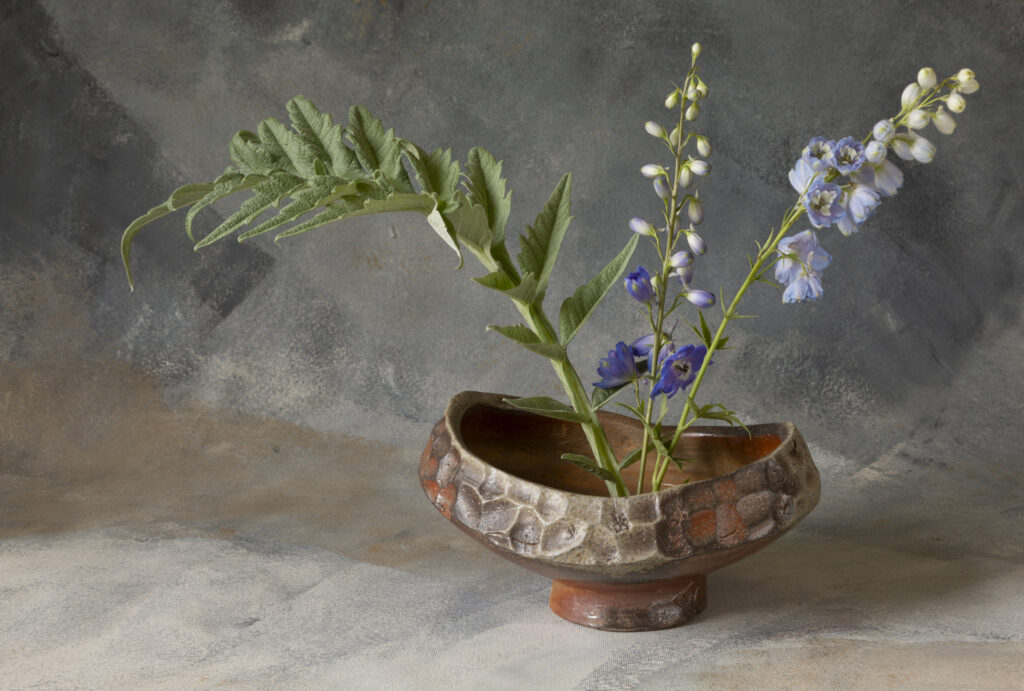
    Delphinium and Cardoon

    aren’t we all seasons
    In the begging breeze

    I swear I have been
    listening since the
    beginning

    I swear I have listened to everything

    —Jake Rose, from Joan, University of Chicago Press, 2026

  • #4 summer shards 2026

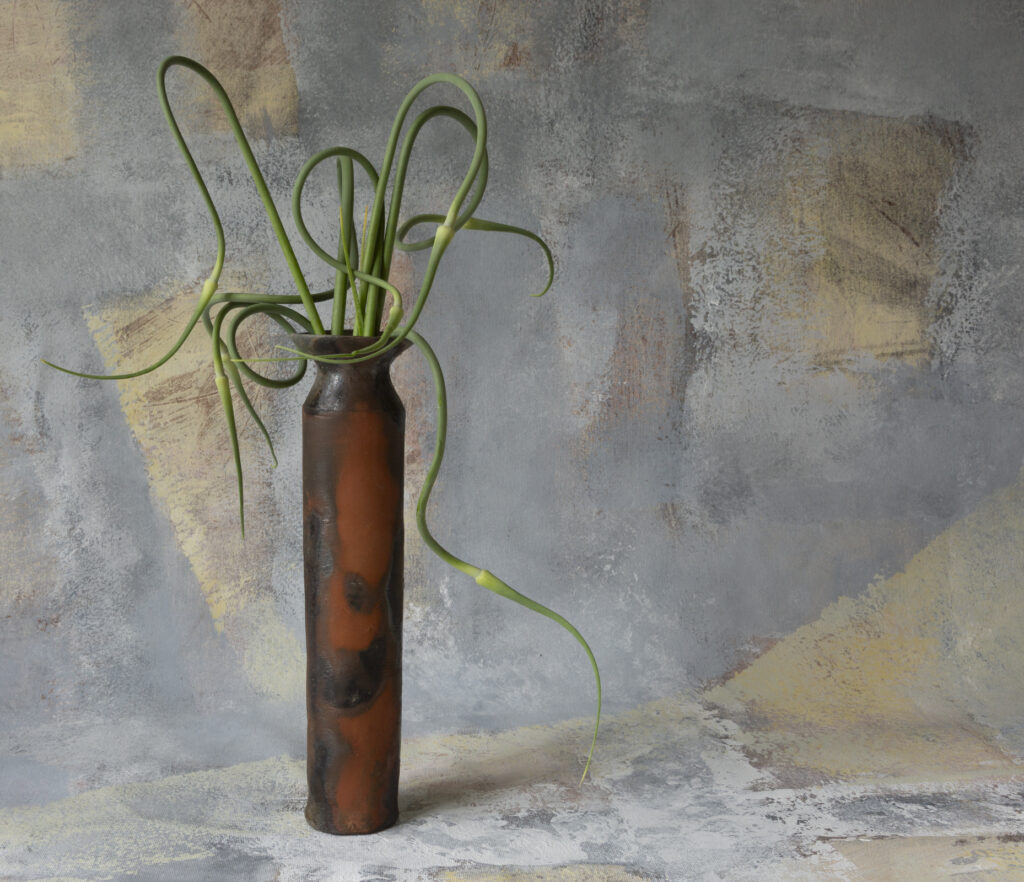
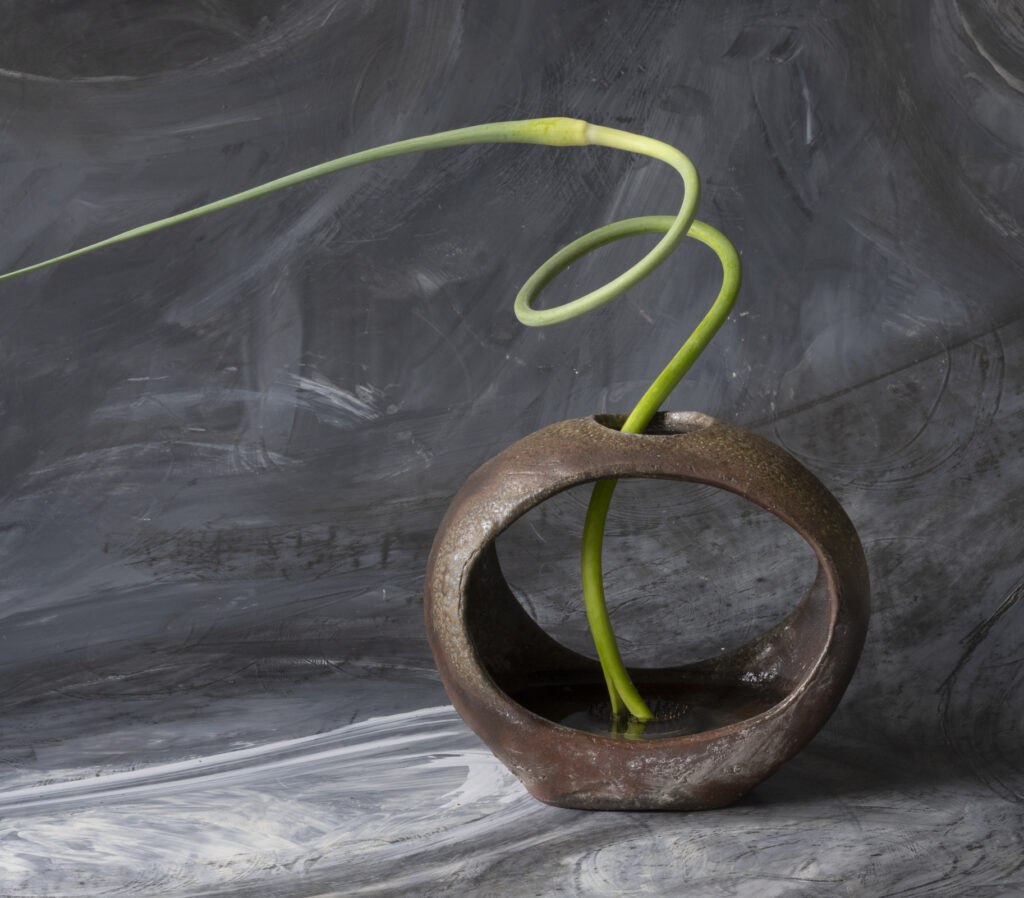
    This spring several friends asked me whether I would do another series of June posts. And my answer has been, “I aim to.” Each June feels as if it pulls me through the season faster than the last. My earliest version of this series in 2000 (link above) began as tiny envelopes that I gave to my daughter each morning like an advent calendar. In each envelope was a word that had to do with light. I plunked those envelopes and words on my scanner with painted pages of backgrounds and emailed them to a few friends. Warren, always the archivist of the household, printed and assembled them into a book to share with his parents. I remember Zoë sitting on the luggage as we headed out the door, finding the book and reading the pages feeling slightly left out that she had not been included in the larger message. Those envelopes have grown, like my garden. I am here watching the bumblebees and cutting the garlic scapes. I cannot save the world, but by looking closely the world is saving me.

    This Spring

    How can I love this spring
    when it’s pulling me
    through my life faster
    than any time before it?
    When five separate dooms
    are promised this decade
    and here I am, just trying
    to watch a bumblebee cling
    to its first purple flower.
    I cannot save this world.
    But look how it’s trying,
    once again, to save me.

    —James A. Pearson, in The Wilderness That Bears Your Name, Goat Tail Press, 2024

  • #3 summer shards 2026

    When working towards a firing in our wood kiln, I choose to be confined to my studio world. I am happy working in soft clay with delicate touches in the winter light. I often make mistakes. When working large and thick I edit down. Sometimes, I refer back to the journals and images from my travels to far away cities or the books in our library which can take me to endless kiln sites in the history of ceramics. But ultimately, I end up recognizing my own inherent ways of working, looking, and touching.

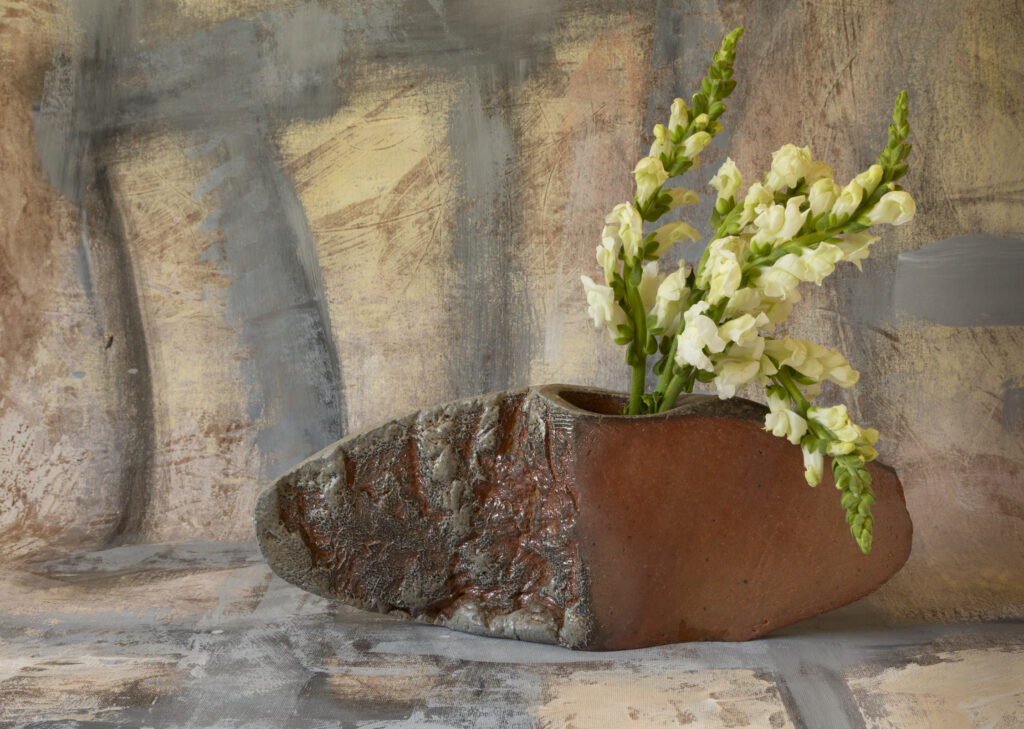
    Snapdragon

    New Soul

    We begin confined to a world
    soft and small and delicate.
    If we’re lucky,
    we end in the same half-light.

    My children ask why I make
    so many mistakes
    and I don’t have the heart to tell them
    this is my first rodeo
    just as much as it is theirs.

    I had to go to every city
    just to find out how
    we take ourselves
    everywhere we go.

    —Kate Baer, in How About Now: Poems, HarperCollins, 2025.