Author: Catherine White

  • #17 summer summit

    Warren and I finished stacking our kiln this evening. I often refer to loading the kiln as being similar to doing a three dimensional puzzle. Making pots for that puzzle is both a joy and a knot of a problem. The kiln is an organic whale shape in which the pots sit in and on top of each other. Remembering the clues in order to have enough to fire the kiln is often a quandary. I remember the first time I took responsibility to fire the wood kiln I worked so hard that original effort is stored as a form of muscle memory.

    I once had a helper ask me, “how do you plan for stacking this kiln.” I told her I make drawings and lists and then I dream about it. Sometimes planning for the firing feels like filling the inside of piano. At other times it’s more like shopping in a bodega. Today I felt like my whole body was in overdrive and I could not ascertain which direction or which object would solve the riddle of finishing the stack. Stacking our kiln is not a race, nor an equation or a formula. It comes together like a poem with balance, flow, and direction–a specific seasoning for this cycle of work. There are plenty of pots remaining, a good head start to firing a gas kiln in the near future.

    THE PROBLEM

    You are trying to solve a problem.
    You’re almost certainly halfway done,
    maybe more.

    You take some salt, some alum,
    and put it into the problem.
    Its color goes from yellow to royal blue.

    You tie a knot of royal blue into the problem,
    as into a Peruvian quipu of colored string.

    You enter the problem’s bodegas,
    its flea markets, souks.
    Amid the alleys of sponges and sweets,
    of jewelry, spices, and hair combs,
    you ponder which stall, which pumpkin or perfume, is yours.

    You go inside the problem’s piano.
    You choose three keys.
    One surely must open the door of the problem,
    if only you knew only this:
    is the quandary edible or medical,
    a problem of reason or grief?

    It is looking back at you now
    with the quizzical eyes of a young, bright dog.

    Her whole body pitched for the fetch,
    the dog wants to please.
    If only she could ascertain which direction,
    what object, which scent of riddle,
    and if the problem is round or elliptical in its orbit,
    and if it is measured in foot-pounds, memory, or meat.

    –Jane Hirshfield

  • #16 summer summit

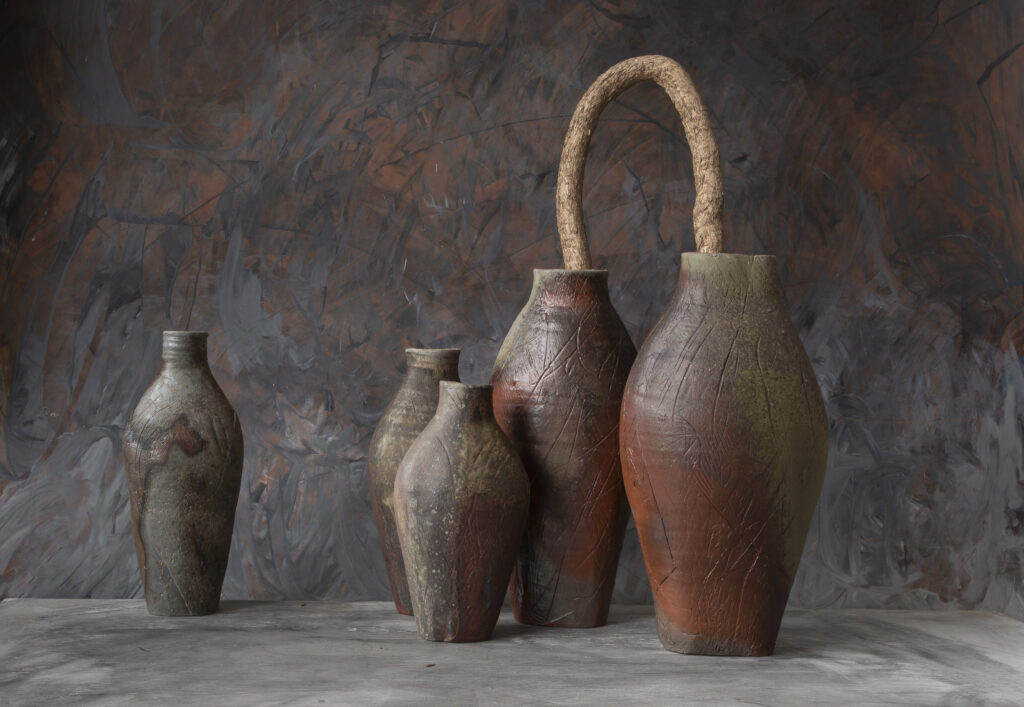
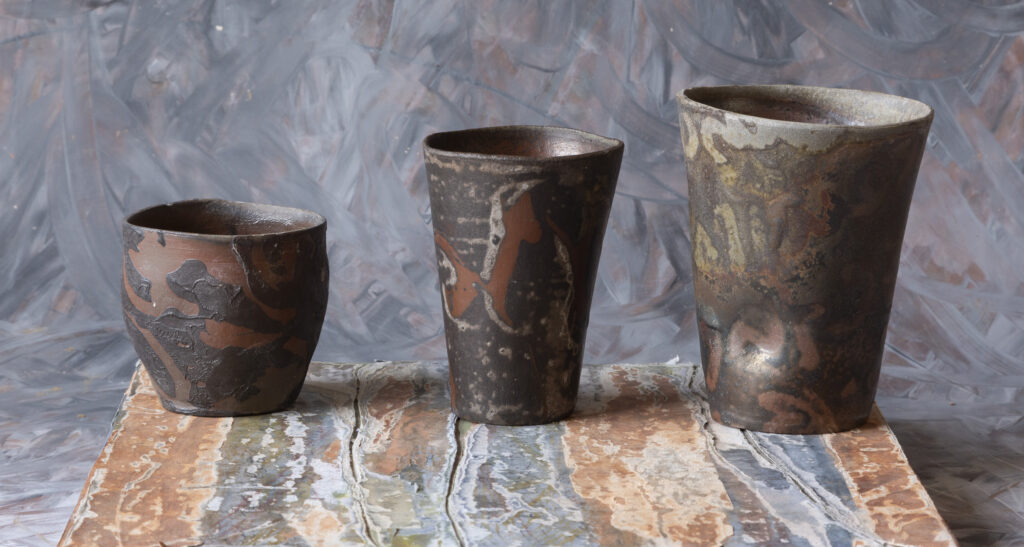
    The kiln loading continued today. To be aesthetically effective requires a mix ranging from large sculptural vases to petite espresso cups. The resonance of each piece is different. Some are new and intriguing making me totally invested in seeing them fired to fruition. Other work has receded in immediacy so there is actually more freedom in the range of potential resolutions.

    FOR WHAT BINDS US

    There are names for what binds us:
    strong forces, weak forces.
    Look around, you can see them:
    the skin that forms in a half-empty cup,
    nails rusting into the places they join,
    joints dovetailed on their own weight.
    The way things stay so solidly
    wherever they’ve been set down—
    and gravity, scientists say, is weak.

    And see how the flesh grows back
    across a wound, with a great vehemence,
    more strong
    than the simple, untested surface before.
    There’s a name for it on horses,
    when it comes back darker and raised: proud flesh,

    as all flesh
    is proud of its wounds, wears them
    as honors given out after battle,
    small triumphs pinned to the chest-

    And when two people have loved each other
    see how it is like a
    scar between their bodies,
    stronger, darker, and proud;
    how the black cord makes of them a single fabric
    that nothing can tear or mend.

    –Jane Hirshfield, in Of Gravity & Angels, Wesleyan University Press, 1988

  • #15 summer summit

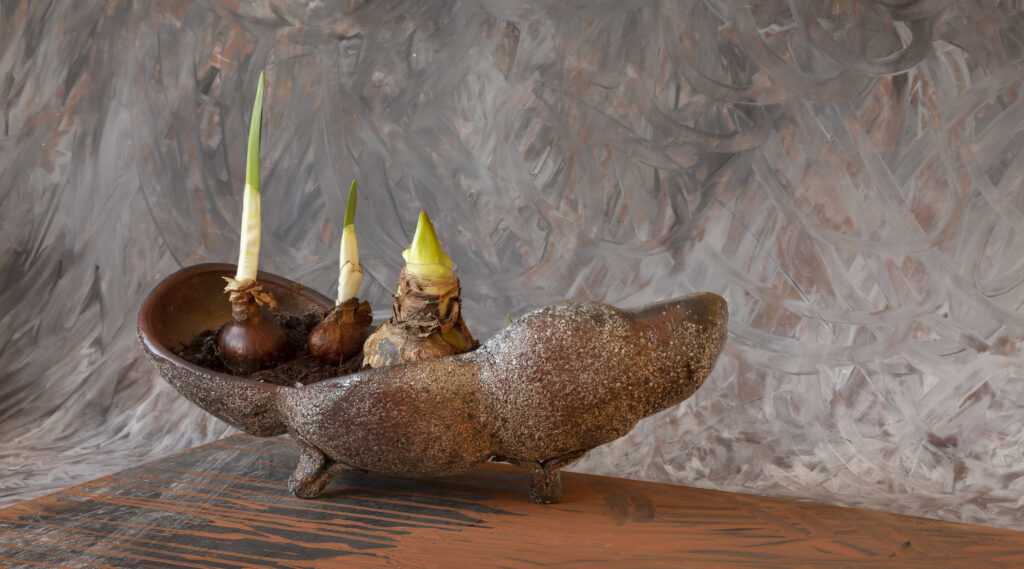
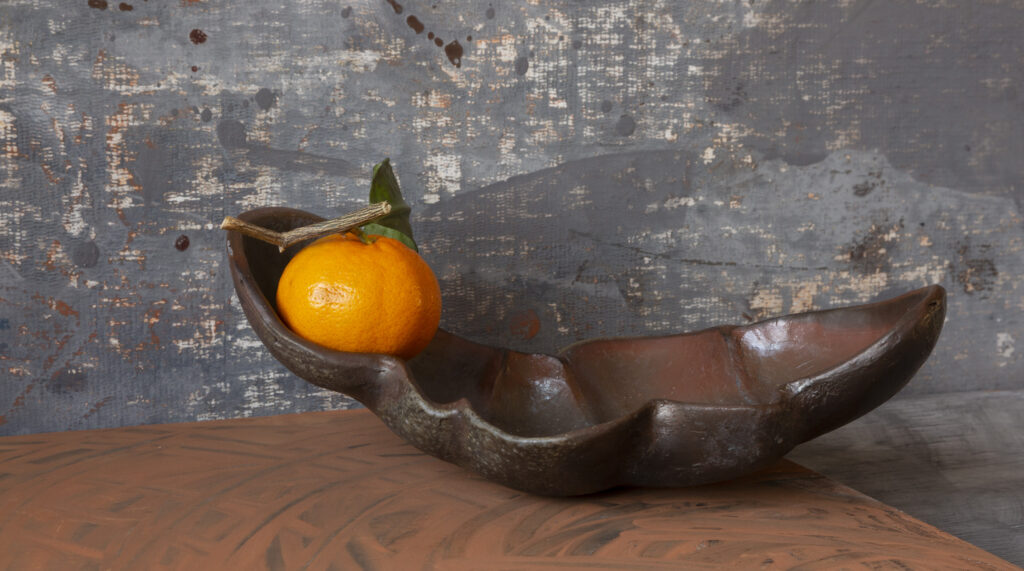
    Warren and I have been quietly working in our cave of a kiln. We find we have a personal language we use when referring to pots. So we ask each other, “please pass me the boat, or the fish tail, or the trumpet.” Our verbal shorthand becomes a poetic language. We photograph our progress in stacking, but I realize all the ways it does not capture the rhythm of choices, the things we have learned, or the mistakes we might be making.

    The poem that follows is based on a series of photos taken by the photographer Carrie Mae Weems. I found it is best when read aloud. The words work like an echo chamber and remind me that photography depends so much on the gaze of the artist. Both the photographer and the poet shift our gaze through text, color, repetition. Weems and ford remind us what has changed in our culture, what has yet to change, and what we hope to change.

    [Swiss Chard in a Boat]

    from here i saw what happened and i cried

    after Carrie Mae Weems

    the blood is red the blues is red the blues
    is blood the red is dirt the dirt is brown

    the brown is red the dirt is blood the blood
    is blues the blues is brown the brown is skin

    the skin is blood the blood is kin the kin
    is red the red is blood the blood is new

    the new is skin the skin is news the news 
    is brown the brown is noose the noose is red

    the red is blues the blues is dirt the dirt
    is skin the skin is blues the blues is kin

    the kin is brown the brown is blood the blood
    is news the news is black the black is new

    the new is red the red is noose the noose
    is black is blues is brown is red is blood—

    — t’ai freedom ford, from & MORE BLACK, Augury Books

  • #14 summer summit

    To fire a wood kiln one has to be resilient. It is not a matter of simply doing it over and over again. We have to lean towards the dreams that are held in our mind’s eye, to scratch and scratch at the itch of the embryonic ideas held in our imaginations. It’s through the tenacity of tree-like growth that we blend our dreams with our hands, the kiln, and clay.

    We amass 400-500 raw pots and then spend several days placing them in the kiln. As each pot gets placed we are imagining how it might look after it shrinks and is licked by the flame and marked by the kiln’s atmosphere. Some pots are placed to block the the path of the flame so that it will turn or linger. We like to remember what we did in prior firings, trying to build on experience rather than insanely making the same mistake over and over again yet hoping for a new result.

    Today as we chose the work for the back of the kiln and counted plates for the floor I had my moments of doubt. Do we have enough pots? Do we have too many pots. I have learned these are the questions I ask every time I fire.

    OPTIMISM

    More and more I have come to admire resilience.
    Not the simple resistance of a pillow, whose foam
    returns over and over to the same shape, but the sinuous
    tenacity of a tree: finding the light newly blocked on one side,
    it turns in another. A blind intelligence, true.
    But out of such persistence arose turtles, rivers,
    mitochondria, figs — all this resinous, unretractable earth.

    –Jane Hirshfield, in Each Happiness Ringed by Lions: Selected Poems

  • #13 summer summit

    In a way many of my artist friends were prepared for a pandemic. They tend to prefer their studios to a more social life. When artists are at their best they look at the most difficult things in our society, digging to find an alternative way to navigate into current events. There are times when that digging feels like searching in our pockets for reading glasses, house keys, or a passport but at other times we find tears, meaning, and forgotten memories.

    Shovel Plate

    VEST

    I put on again the vest of many pockets.

    It is easy to forget
    which holds the reading glasses,
    which the small pen,
    which the house keys,
    the compass and whistle, the passport.

    To forget at last for weeks
    even the pocket holding the day
    of digging a place for my sister’s ashes,
    the one holding the day
    where someone will soon enough put my own.

    To misplace the pocket
    of touching the walls at Auschwitz
    would seem impossible.
    It is not.

    To misplace, for a decade,
    the pocket of tears.

    I rummage and rummage—
    transfers
    for Munich, for Melbourne,
    to Oslo.
    A receipt for a Singapore kopi.
    A device holding music:
    Bach, Garcia, Richter, Porter, Pärt.

    A woman long dead now
    gave me, when I told her I could not sing,
    a kazoo.
    Now in a pocket.

    Somewhere, a pocket
    holding a Steinway.
    Somewhere, a pocket
    holding a packet of salt.

    Borgesian vest,
    Oxford English Dictionary vest
    with a magnifying glass
    tucked inside one snapped-closed pocket,
    Wikipedia vest, Rosetta vest,
    Enigma vest of decoding,
    how is it one person can carry
    your weight for a lifetime,
    one person
    slip into your open arms for a lifetime?

    Who was given the world,
    and hunted for tissues, for chapstick.

    –Jane Hirshfield, in Ledger, Alfred A. Knopf, 2020

  • #12 summer summit

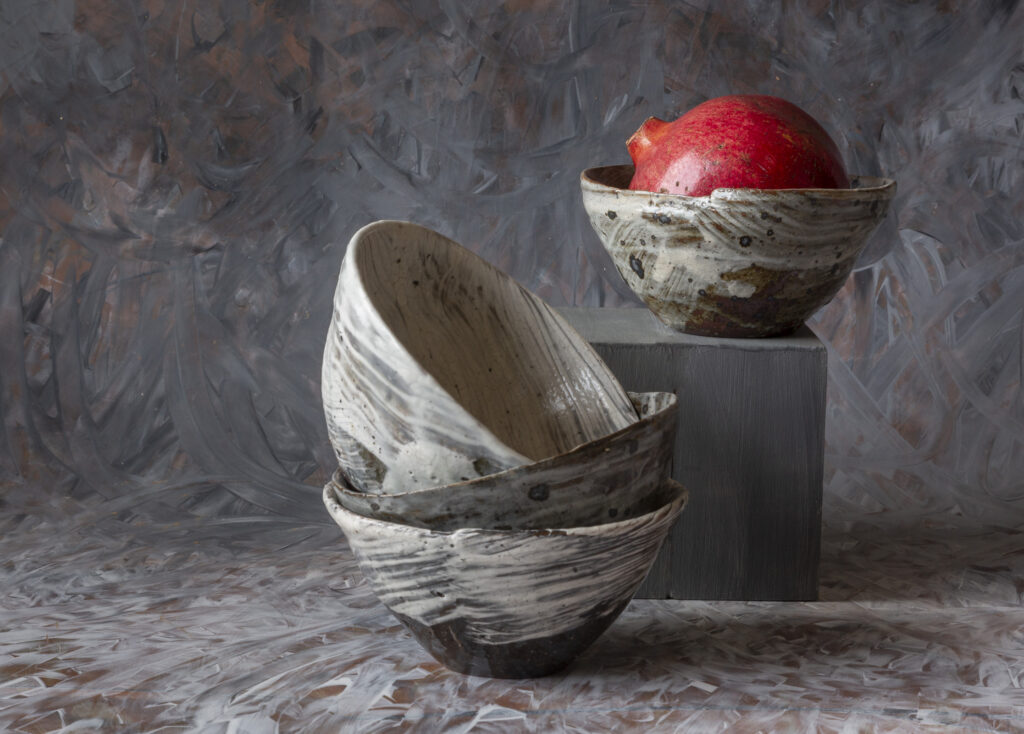
    A friend of mine took a photo of a bowl of clover. It was evidence of the day with her daughter who was making a meal for fairies. The image made me wistful for the days of fairies with my daughter. Days when we filled bowls with acorns, rocks, and memories. I know Covid-19 has been hard for families with children at home as well as difficult for those friends with parents in nursing homes or assisted living facilities.

    I may ache to be with my daughter. I have fond memories of times in New York City, easy habits of riding the subway to Brooklyn, of drinking in the street life culture, of experiencing art in the museums, and of meals at new and old favorite restaurants. My daughter and I have tried to keep notes on the things we notice, feel, read, and cook during the pandemic. I draw the accumulations of things in bowls. One week it might be potatoes or peonies while for the next cycle it is strawberries.

    Today I noticed Catalpa flowers strewn in the grass while I was out picking up sticks. I thought those would make a nice collection but they were past their prime. The pristine ones remaining were high on the trees way out of reach. I am wistful for cooking meals with friends and picking out bowls to serve from. But I also stop to ask when this is over and we look back at this time what will I be nostalgic for? The bowl of peas or the quiet dinners on the porch? Imaging things like this won’t make the loss of loved ones any easier, but it will help me fill my bowl.

    THE BOWL

    If meat is put into the bowl, meat is eaten.

    If rice is put into the bowl, it may be cooked.

    If a shoe is put into the bowl,
    the leather is chewed and chewed over,
    a sentence that cannot be taken in or forgotten.

    A day, if a day could feel, must feel like a bowl.
    Wars, loves, trucks, betrayals, kindness,
    it eats them.

    Then the next day comes, spotless and hungry.

    The bowl cannot be thrown away.
    It cannot be broken.

    It is calm, uneclipsable, rindless,
    and, big though it seems, fits exactly in two human hands.

    Hands with ten fingers,
    fifty-four bones,
    capacities strange to us almost past measure.
    Scented—as the curve of the bowl is—
    with cardamom, star anise, long pepper, cinnamon, hyssop.

    –Jane Hirshfield, in Ledger, Alfred A. Knopf, 2020

  • #11 summer summit

    Each Thursday Warren and I turn to each other and ask how did time run out of the week. I try not to listen to the news because I run out of tears. While the dish towel may run out of the ability to dry another plate, I stop to ask where did the idea of a plate come from? Was the first plate a hand, a rock or a leaf? As potters these are the questions that keep us going back to find answers that don’t exhaust the questions.

    A WELL RUNS OUT OF THIRST

    A well runs out of thirst
    the way time runs out of a week,
    the way a country runs out of its alphabet
    or a tree runs out of its height.
    The way a brown pelican
    runs out of anchovy-glitter at darkfall.


    A strange collusion,
    the way a year runs out of its days
    but turns into another,
    the way a cotton towel’s compact
    with pot and plate seems to run out of dryness
    but in a few minutes finds more.


    A person comes into the kitchen
    to dry the hands, the face,
    to stand on the lip of a question.


    Around the face, the hands,
    behind the shoulders,
    yeasts, mountains, mosses multiply answers.


    There are questions that never run out of questions,
    answers that don’t exhaust answer.


    Take this question the person stands asking:
    a gate rusting open.
    Yes stands on its left, no on its right,
    two big planets of unpainted silence.

    –Jane Hirshfield, from The Beauty, Alfred A. Knopf, 2015

  • #10 summer summit

    This morning when I could do nothing else I took a photo of my morning coffee against a protest photo from the Washington Post. The sign in the foreground read “no justice no peace;” in the background loomed the Capital building. This evening as I lingered on the porch, the best seat in the house for breezes bringing some cooler air, I saw my first fireflies of the season. I wanted to ask them, how is your life?

    TODAY, WHEN I COULD DO NOTHING

    Today, when I could do nothing,
    I saved an ant.

    It must have come in with the morning paper,
    still being delivered
    to those who shelter in place.

    A morning paper is still an essential service.

    I am not an essential service.

    I have coffee and books,
    time,
    a garden,
    silence enough to fill cisterns.

    It must have first walked
    the morning paper, as if loosened ink
    taking the shape of an ant.

    Then across the laptop computer — warm —
    then onto the back of a cushion.

    Small black ant, alone,
    crossing a navy cushion,
    moving steadily because that is what it could do.

    Set outside in the sun,
    it could not have found again its nest.
    What then did I save?

    It did not move as if it was frightened,
    even while walking my hand,
    which moved it through swiftness and air.

    Ant, alone, without companions,
    whose ant-heart I could not fathom—
    how is your life, I wanted to ask.

    I lifted it, took it outside.

    This first day when I could do nothing,
    contribute nothing
    beyond staying distant from my own kind,
    I did this.

    –Jane Hirshfield, published March 23, 2020 in the San Francisco Chronicle

  • #9 summer summit

    My mother painted and wrote through all of her adventures which included traveling and raising children. As her only daughter I am embarrassed to admit how critical I was of her. I wanted my Mom to promote herself more. I wanted her to speak up to my father differently. I wanted her to work bigger and to overflow her notebooks. But as I look through her work and her words I realize that as much as I was disparaging of her — she is so much of the impetus for what I do and how I try to go forward. I see some faults and want to do better. Yet it has finally occurred to me that maybe that is the sign of a great teacher, letting her child/student feel empowered to do better in the world.

    ‘I am your own way of looking at things,’ she said. ‘When you allow me to live with you, every glance at the world around you will be a sort of salvation.’ And I took her hand.

    –William Stafford, from “When I Met My Muse,” You Must Revise Your Life (University of Michigan Press, 1991)

  • #8 summer summit

    I recently unearthed the poem Continue by Maya Angelou from my yoga file (a folded group of papers at the bottom of my yoga bag). These poems accumulate from those read each Wednesday when one of my yoga groups meets. In the studio today I worked from the poem’s words for a series of asemic poem plates. Drawing through an even layer of white clay dust I write parts of the poem over and over. When I transfer the dust words to the clay they are printed backwards and mostly illegibly. I continued to work on this idea of simple materials fired in a simple kiln. I repeat and write these words as if they were a chant to get past the cruelty in our society. An eloquent chant to remind myself and others that there is good in the world. A means to plant an abstract kiss of concern on the cheek of those who are sick or grieving. I remember my mother who frequently picked small bouquets of roadside flowers, balancing them in glasses or dixie cups. I am once again reminded to take a moment for beauty.

    CONTINUE

    On the day of your birth
    The Creator filled countless storehouses and
    stockings
    With rich ointments
    Luscious tapestries
    And antique coins of incredible value
    Jewels worthy of a queen’s dowry
    They were set aside for your use
    Alone
    Armed with faith and hope
    And without knowing of the wealth which awaited
    You broke through dense walls
    of poverty
    And loosed the chains of ignorance which
    threatened to cripple you so that you
    could walk
    A Free Woman
    Into a world which needed you
    My wish for you
    Is that you continue

    Continue

    To be who and how you are
    To astonish a mean world
    With your acts of kindness

    Continue

    To allow humor to lighten the burden
    of your tender heart

    Continue

    In a society dark with cruelty
    To let the people hear the grandeur
    Of God in the peals of your laughter

    Continue

    To let your eloquence
    Elevate the people to heights
    They had only imagined

    Continue

    To remind the people that
    Each is as good as the other
    And that no one is beneath
    Nor above you

    –Maya Angelou, excerpt of poem written for Oprah Winfrey