I make an effort to give my pots names. When we are loading the wood kiln it helps to be able to say—”hand me the small moon vase” or the large “sandwich vase.” I remember in 2013 when Warren and I were preparing for an exhibit of plates at Omen-Azen Mikio pressed us to come up with poetic names for each series of plates. At that point in time I thought of names in terms of clay, firing, or process, but he encouraged us to think of our pots like witnesses to nature. No matter if the piece felt ancient or classical Mikio nurtured us to find mysterious names that were beyond the material.
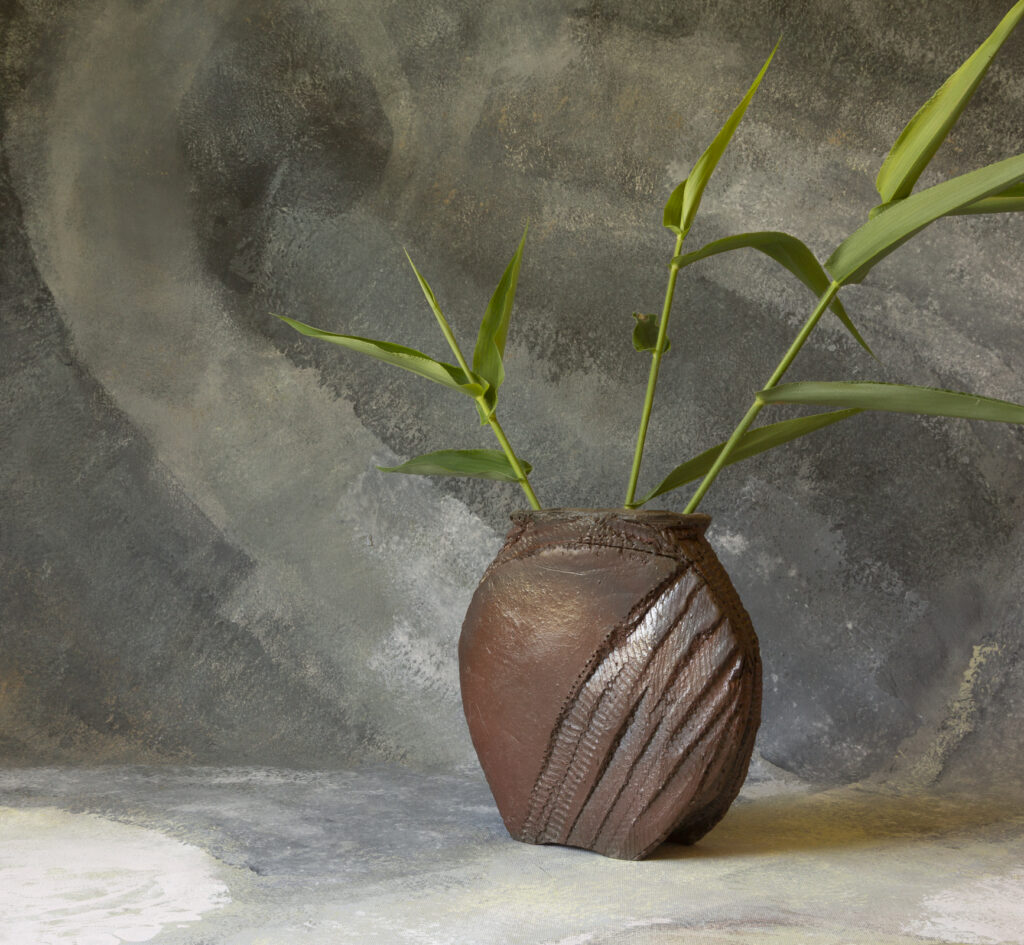
Pluto

Don't feel small. We all have
been demoted. Go on being

moon or rock or orb, buoyant
and distant, smallest craft ball

at Vanevenhoven's Hardware
spray-painted purple or day-glow

orange for a child's elliptical vision
of fish line, cardboard and foam.

No spacecraft has touched you,
no flesh met the luster of your

heavenly body. Little cold one, blow
your horn. No matter what you are

planet, and something other than
planet, ancient but not "classical,"

the controversy over what to call you
light-hours from your ears. On Earth

we tend to nurture the diminutive,
root for the diminished. None

of your neighbors knows your name.
Nothing has changed. If Charon's

not your moon, who cares? She
remains unmoved, your companion.

—Maggie Dietz, from That Kind of Happy, University of Chicago Press, 2016
Leave a Reply