Category: rough ideas

  • #4 decembrance 2021

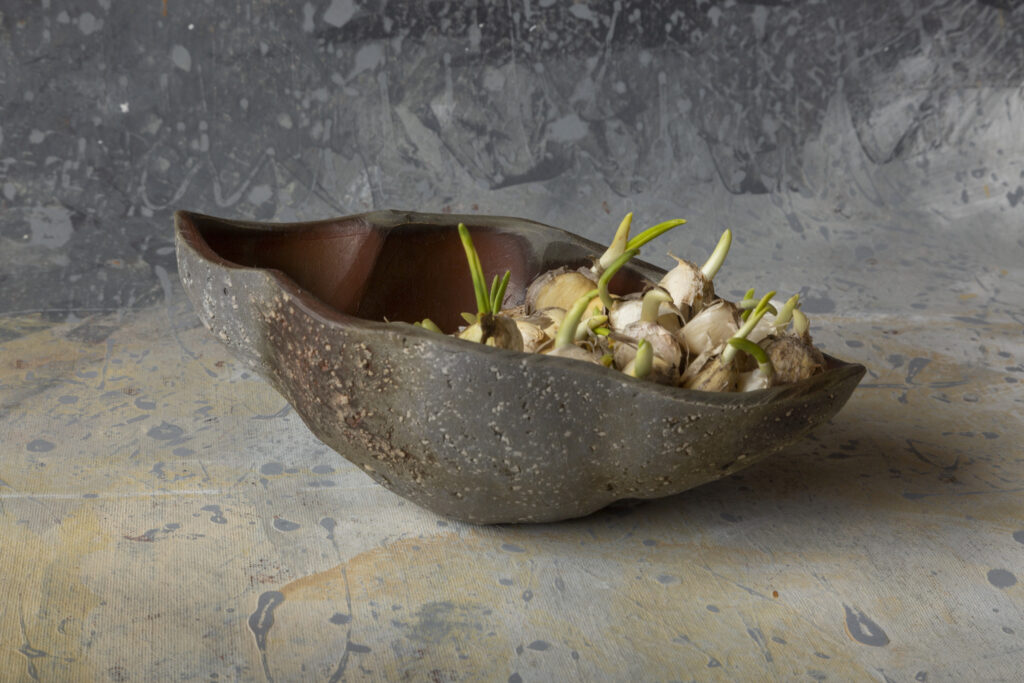
    Yesterday and today I spent part of the afternoon planting garlic. Being outside, hands in the dirt, weeding and pulling out old vines, shifting compost—all these tasks move me out of my head and into physical attention where I notice the nuances of nature and relationships between growth and decay. I am struck by the smell of the frost bitten dill still hanging on by a thread or the withered Mexican marigolds that are particularly fragrant. Today’s goal was to plant garlic. I slip the garlic bulbs into the holes, sweep soil over them and cover them with a mulch of shredded leaves. The bulbs hold potential but are now gone from my sight. I trust they will grow. It is actually a mystery, the mechanics of how it all works, but perhaps that is why it is thrilling when they sprout and later when they are harvested.

    In our friendship with Mikio he would often disappear for stretches of time, sometimes we might even be in the restaurant discussing a potential plate or bowl. I was left to wonder what next? He would return with an idea. His absences to Japan, Italy or California were often a mystery but for him nuances and projects were brewing. It was not unlike the miracle of garlic growing in the ground in the winter months.

    “According to Buddhist teaching, there is a very close interdependence between the natural environment and the sentient beings living in it. These verses express the essential gentleness of the human spirit. They tell us that we should not only maintain gentle, peaceful relations with our fellow human beings, but that it is also very important to extend the same kind of attitude toward the environment.”

    —The Dalai Lama, April 11, 1997, in the preface to Mikio’s book of his father’s calligraphy, Talk To A Stone: Nothingness, A Joost Elfferts Book published by Stewart, Tabori & Chang

  • #3 decembrance 2021

    I grew up as an atheist. But after losing someone in our close circle I can’t help but feel like I see them everywhere. I dream about them. I hope to speak to them again. I remember the turn of a wrist, the habit of speech. One of our early visits with Mikio was at the height of autumn at our house in Maryland. Mikio brought one of the chefs from Omen who had not yet been out of New York City. Our driveway was stupendously covered in yellow maple leaves. The chef took a walk at dusk and returned after dark covered in yellow leaves like he had been rolling in nature.

    The Lesson Of The Falling Leaves

    the leaves believe
    such letting go is love
    such love is faith
    such faith is grace
    such grace is god
    i agree with the leaves

    –Lucile Clifton

  • #2 decembrance 2021

    I took my dog walk with Luna a bit early today. We had been to visit a friend in Fredericksburg and I needed to stretch my legs. The air was warm and the clouds grey on one side of the sky and the sun low on the other side. The trees were stark against the dark clouds, shadows rippled through the neighbor’s pasture, the pale green of a hillside was reflected in a still pond. As I tried to capture something of the moment in a photo, a group of five swans flashed bright against the dark clouds. Everything felt interconnected—the swans contrasted against the dark sky, resurrecting my memory of the family of swans that nested on our pond this year. All linked together—the moment, the memory and the future.

    Speaking of memory, we have been digging through our archive of photos. First I sought images of my pregnant body for Zoe as she moved through her own pregnancy. Then I’m amassing pictures of her as a newborn to discern family resemblances with her son Larkin. Most recently we are gathering photographic evidence of our long friendship with Mikio Shinagawa who recently passed away. He was a true friend, mentor, a great connector and encourager in our life. These deep dives in images and memories remind me of the interconnectedness of our neighbors, ancestors, landscape, food and artwork. Mikio always tried to remind us of our connections, in New York, Virginia, Maine, Japan and beyond. While we often looked to our past, Mikio always asked us to look toward the children of our future.

    Q: What do you hope readers will take away from Cloud Cuckoo Land?

    A: I hope readers are reminded of our myriad interconnections: with our ancestors, with our neighbors, with other species, with all the kids yet to be born. I believe that the more we can remember how much we’re all in the same boat—the more we can train ourselves to imagine, recognize, and remember our connections—with the bacteria in our guts, the birds outside our windows, the meals on our plates, and the children in our futures—the better off we’ll be.

    –Anthony Doerr

  • #1 decembrance 2021

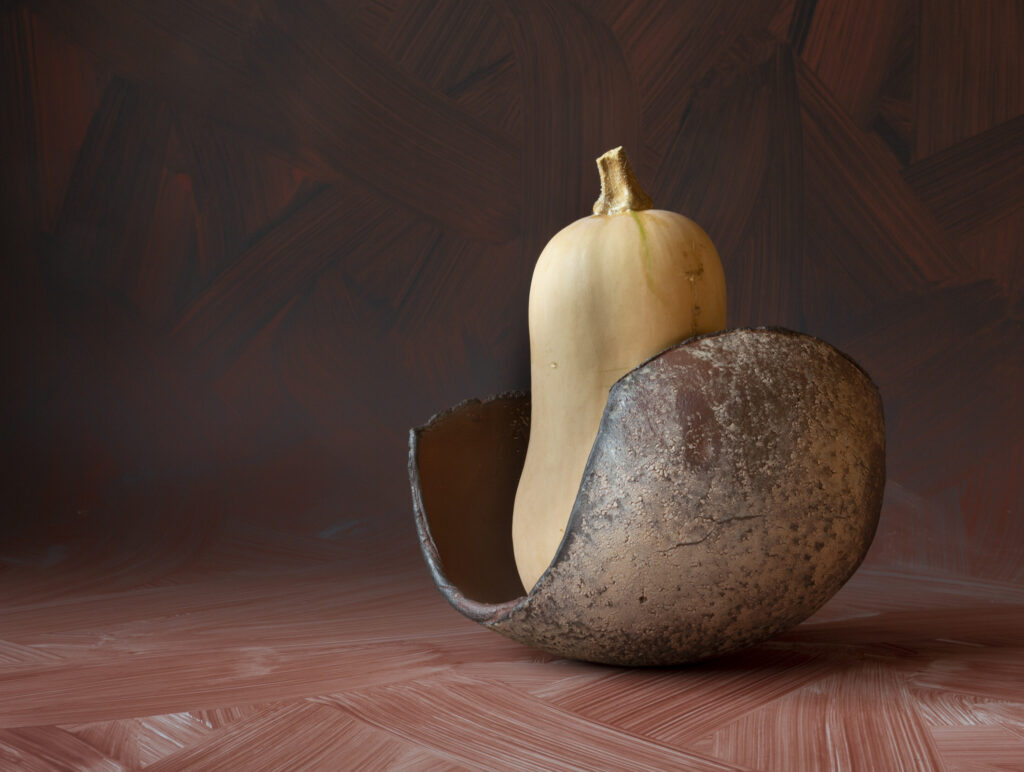
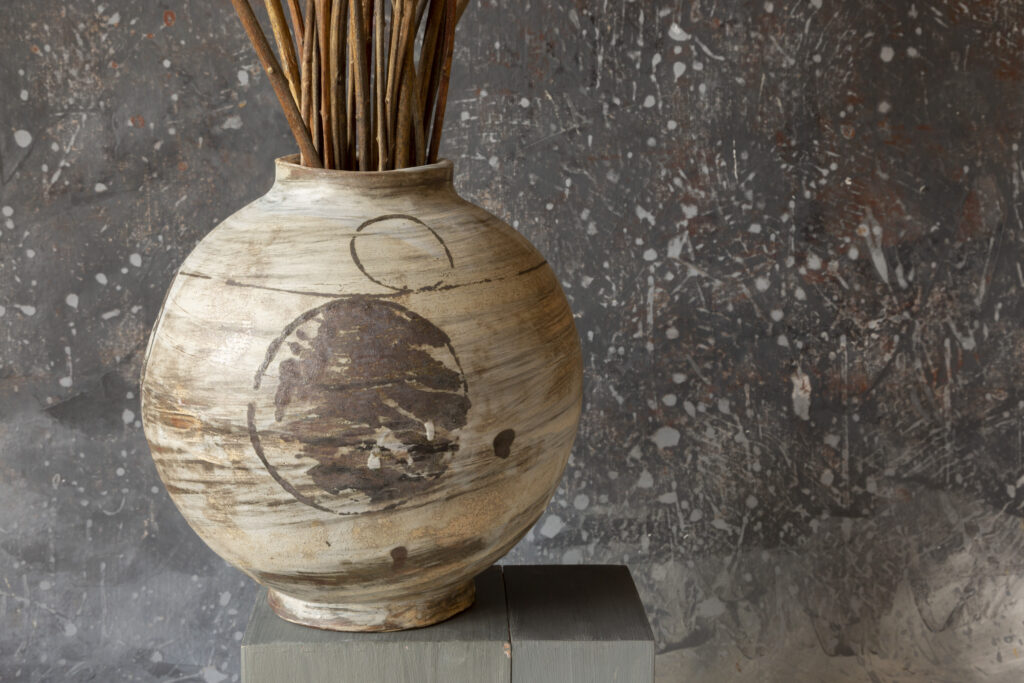
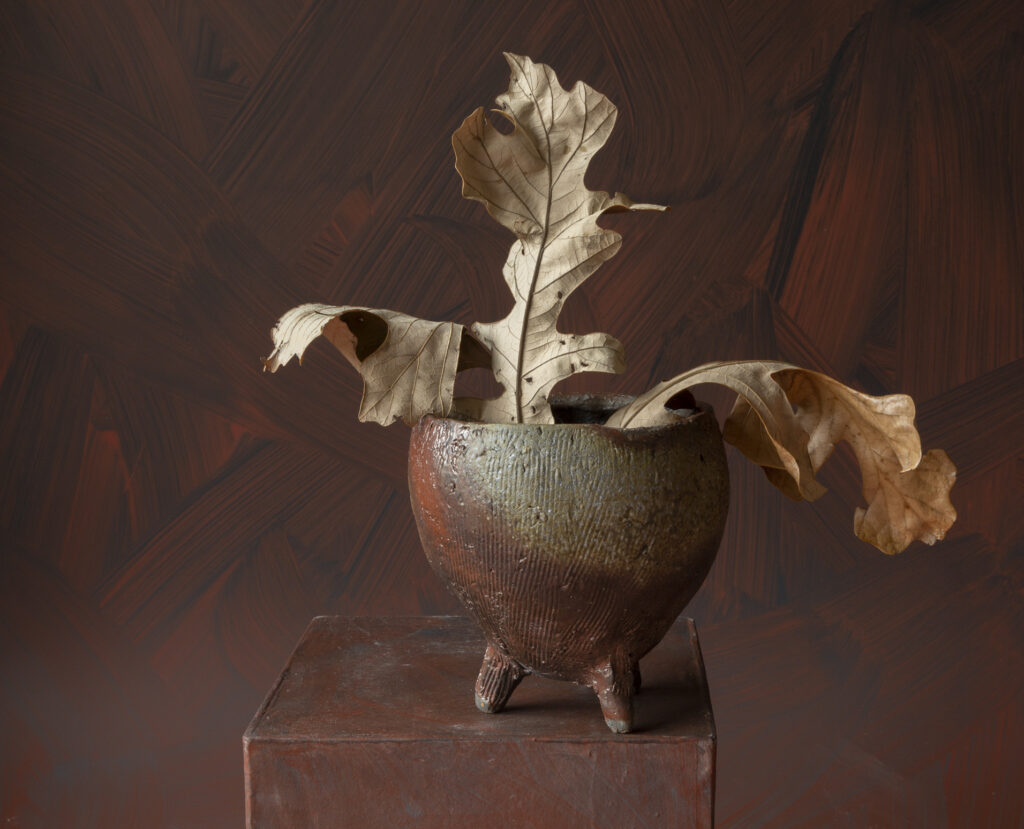
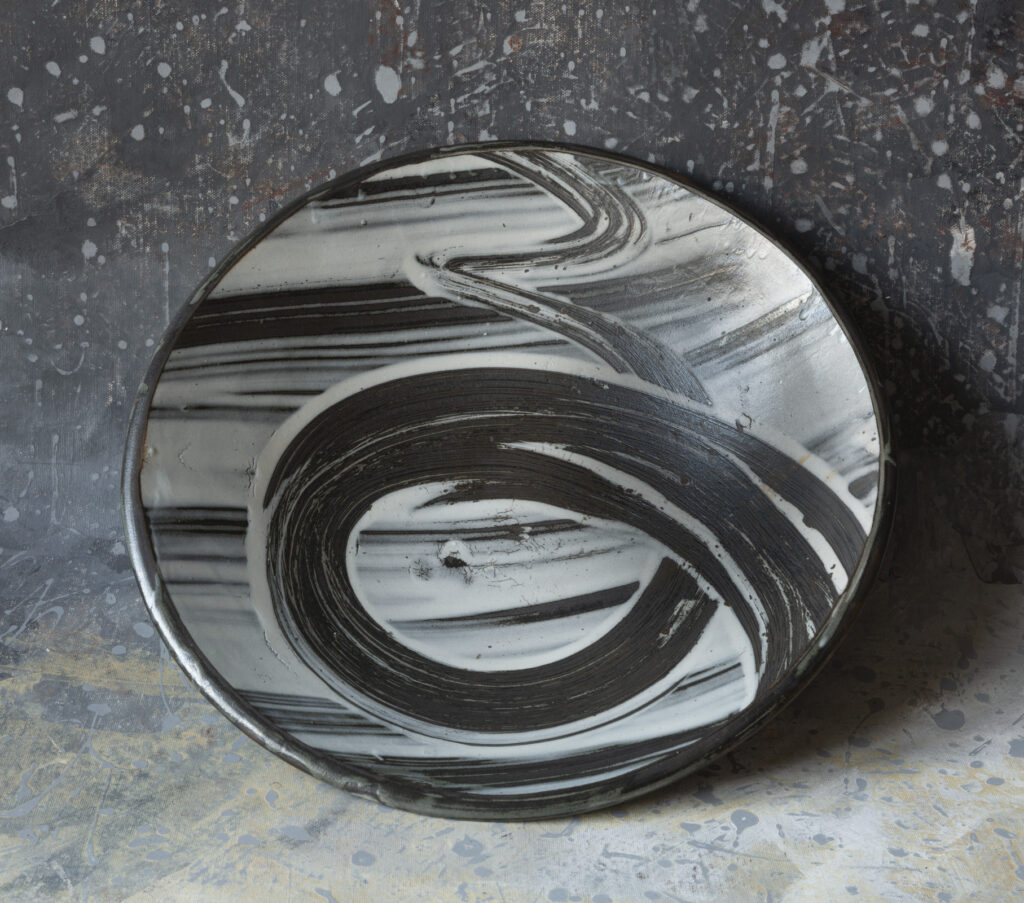
    Welcome to another series of my decembrance project. Each year the accumulation of 21 images is part memoir, part ode to the light as we count down to the shortest day of the year. It is a glimpse of the pots I have been making, the growing and browning things that catch my eye mixed with poems or quotes that resonate with the moment. Each year as the calendar shifts to December I wonder, Is it darker this year? The leaves have piled higher and deeper. The wind registers a different chord. By writing I remember that my task is to pay attention to the moments of light no matter if it is sunrise, flat noon, sunset, or candle light.

    Even this late it happens:
    the coming of love, the coming of light.
    You wake and the candles are lit as if by themselves,
    stars gather, dreams pour into your pillows,
    sending up warm bouquets of air.
    Even this late the bones of the body shine
    and tomorrow’s dust flares into breath.

    –Mark Strand, The Coming of Light

  • equinox 2021

    When I talk about my work I often use analogies inspired by seeds and gardens. Today as I dug through photographs of myself while pregnant to share with my daughter — who is due to have her baby a day before her own birthday — I thought more about roots. I came across so many images of Warren and I building our house, studio and kilns. We have collaborated to bring up our child, fire our kilns, exhibit our work and dig our roots. The land was pasture when we bought it. We have planted trees and flowers, vines, vegetables and ideas. It took me a long time to feel like Virginia was my home. Many cycles of the seasons have turned their heads. I can look back to see how we have grown our roots and admire the passing summer and welcome the fall.

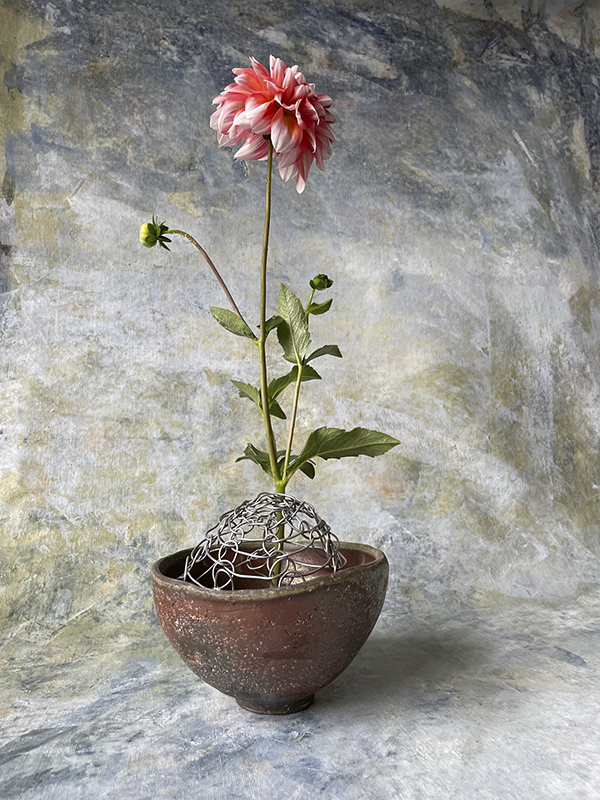
    Dahlia in cw bowl with wf wire sphere

    As I dig for wild orchids
    in the autumn fields,
    it is the deeply-bedded root
    that I desire,
    not the flower.

    -Izumi Shikibu

  • #19 summer summit 2021

    I used to imagine the day I was born but later I realized all the images I pictured were from my father or my older brothers’ perspective, not from my Mom. When we cleared out my parents’ NYC loft we had huge arguments about who should house my mother’s journals. Eventually my oldest brother agreed that I should keep them on the proviso that I also took the years of Museum of Modern Art date books my parents always used to keep track of their lives. Last year I paged through to look at my Mom’s notes leading up to my birth. I found these little daily notes had way more information about my history than I had imagined. There were the dates of when she had been exposed to German measles and when it was no longer a threat. There were doctors appointments and end of school celebrations for my brothers, visits with her siblings. These specific events are what shaped my life. My mother taught me to celebrate the everyday, the flowers on the side of the road, the city gallery, the candle at dinner, and the fireflies off the porch. She taught me that we are making this life up as we go along, between sunset and the clay between my hands holding tight.

    won’t you celebrate with me
    what i have shaped into
    a kind of life? i had no model.
    born in babylon
    both nonwhite and woman
    what did i see to be except myself?
    i made it up
    here on this bridge between
    starshine and clay,
    my one hand holding tight
    my other hand; come celebrate
    with me that everyday
    something has tried to kill me
    and has failed.

    -Lucille Clifton, won’t you celebrate with me, from “Book of Light,” Copper Canyon Press, 1993

  • #18 summer summit 2021

    I love the momentum of making pots for the wood kiln– a long cycle of throwing and building and imagining how each piece will fill the organic space of the kiln. At the end when I have to quit I feel as if I have scraps of ideas that roll around my brain like incomplete poems. It’s always hard to say, “ok this is it, no more for this cycle.” There is excitement for the firing but a wave of sadness for the unmade.

    & then there are those scrap poems, the ones too beautiful to finish writing, ones that would bring us too great a sadness if we ever thought they could really end. There are many of those.

    -J. Todd Hawkins, from “Hooks Brothers,” in This Geography of Thorns: Blues Poetry from the Mississippi Delta & Beyond, Poetry Society of Texas, 2020.

  • #14 summer summit 2021

    I try not to repeat myself in a given series either in the pots I photo, or the flowers, or veggies, or quotes. But sometimes I work as if I was touching the undersides of pots. So the plants in the garden and the objects all need to be touched again.

    I’d rather be loose fire
    Licking the edges of all things but the absolute
    Whose murmur retoggles me.
    I’d rather be memory, touching the undersides
    Of all I ever touched once in the natural world.

    -Charles Wright, from Bicoastal Journal, in “Oblivion Banjo,” Farrar, Straus Giroux

  • #9 summer summit 2021

    I have been looking at a group of bottles on our dining room table, each one from a different firing, each with a different focus on form and surface. On my studio docket today was to make a new series of bottles. I often think about still lives. I remember an interrupted conversation I once had with Gwyn Hanssen Pigot. We were at the Garth Clark Gallery in New York City and I asked her if all the pots in a single still life parade came from the same firing. I wondered if pots ever hung around her studio waiting for the right mates to come along as she composed her parades. Her Australian friend interrupted us–admonishing me as if I didn’t understand how successful Gwyn was–so I never got to return to the conversation. Gwyn was inspired by Morandi’s still lives. When I take photos I often think about his painterly universe of form and structure. I imagine him looking hard at his objects as if any extra effects had been scraped away, as if the emptiness of the canvas was filled through his objects.

    Over there’s the ur-photograph,
              Giorgio Morandi, glasses pushed up on his forehead,
    Looking hard at four objects—
    Two olive oil tins, one wine bottle, one flower vase,
    A universe of form and structure.

    -Charles Wright, from Looking Around

  • #6 summer summit 2021

    I remember after my father died when I packed up all the pots I had made that my parents had saved at their loft over the years. I was surprised to see the beginnings of forms and motifs some of which I am still trying to capture. When I think back to those early attempts at making pots it’s like being pre-literate. I didn’t have the words to describe how a pot filled space, what it’s volume was, or why it was enticing. I often wonder where did the ideas come from. In a few cases I can define a specific influence. I recollect a dinner with Robert Ellison when I was in high school. He showed my parents and I some of his George Ohr pots. My dad said “I remember the things Catherine made after I showed her Picasso’s ceramics. I can’t wait to see what she makes after seeing these twisted and inventive pots.” Today in the studio I was tired of my go-to solutions. Instead I wanted to work as if I was digging potatoes — my hands feeling in the dirt without seeing , yet finding the hard shape of the prized new potato.


    “Children make up the best songs, anyway,” he [Tom Waits] says. “Better than grown-ups. Kids are always working on songs and throwing them away, like little origami things or paper airplanes. They don’t care if they lose it; they’ll just make another one.” This openness is what every artist needs. Be ready to receive the inspiration when it comes; be ready to let it go when it vanishes. He believes that if a song “really wants to be written down, it’ll stick in my head. If it wasn’t interesting enough for me to remember it, well, it can just move along and go get in someone else’s song.” “Some songs,” he has learned, “don’t want to be recorded.” You can’t wrestle with them or you’ll only scare them off more. Trying to capture them sometimes “is trying to trap birds.” Fortunately, he says, other songs come easy, like “digging potatoes out of the ground.” Others are sticky and weird, like “gum found under an old table.” Clumsy and uncooperative songs may only be useful “to cut up as bait and use ’em to catch other songs.”

    -From Elizabeth Gilbert’s terrific [Link:] 2002 GQ profile of Tom Waits